Your website is often one of the first places potential customers go when they want to learn more about your business. They may discover you through Google, social media, a recommendation or an advert, but your website is where they often decide whether to take the next step.
A professional website helps people understand who you are, what you offer and how they can contact you. It gives your business a central online presence where customers can find accurate information at any time.
Whether you run a local service business, growing company, startup or online shop, having a strong website can support your visibility, credibility and long-term growth.
What Is a Professional Business Website?
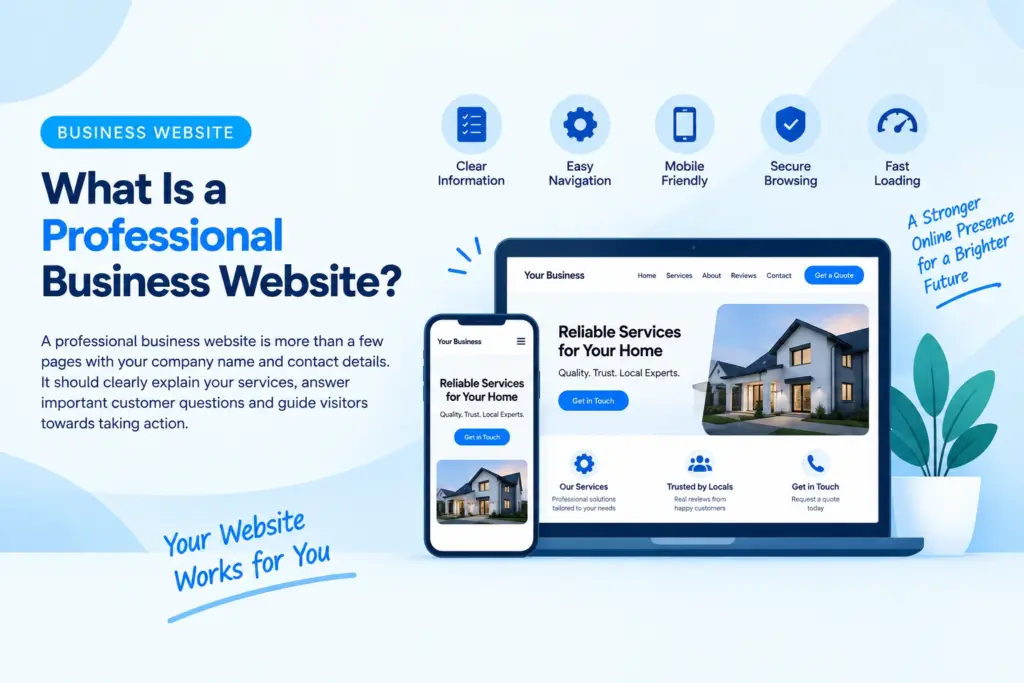
A professional business website is more than a few pages containing your company name and contact details. It should clearly explain your services, answer important customer questions and guide visitors towards taking action.
Your website should also work properly across mobile phones, tablets and computers. Visitors should be able to move between pages easily and find the information they need without confusion. Every part of the website should have a clear purpose and support the customer journey.
A professional website normally includes:
- Clear business information
- Service or product pages
- Contact information
- Simple navigation
- Calls to action
- Customer reviews or testimonials
- Helpful content
- Mobile-friendly design
- Secure browsing
- Fast-loading pages
1. A Professional Website Builds Trust
Trust plays an important role in almost every buying decision. Before contacting a business, potential customers often want to know that the company looks genuine, established and capable of providing the service they need.
A professional website gives you the opportunity to make a strong first impression. Clear information, useful content and easy navigation can help visitors feel more confident about your business.
Your website can build trust by displaying:
- Customer reviews
- Business information
- Contact details
- Service descriptions
- Case studies
- Relevant accreditations
- Frequently asked questions
- Genuine company photos
The easier it is for customers to understand your business, the more confident they may feel about contacting you.
2. Customers Expect Businesses to Have a Website
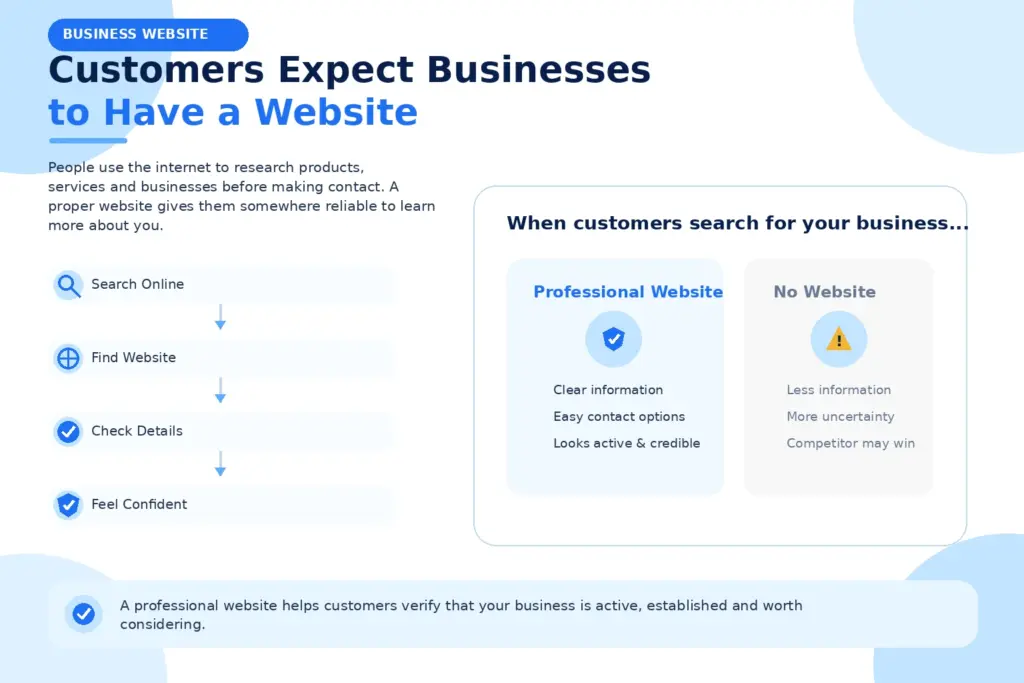
People now use the internet to research almost everything. Before buying a product, booking a service or requesting a quote, customers often search online to compare their options.
If somebody searches for your business and cannot find a proper website, they may question whether your company is still active or whether another provider would be a safer choice.
Having a professional website gives customers somewhere reliable to learn more about you. It shows that your business has invested in its online presence and makes essential information easier to access.
3. Your Website Is Available 24 Hours a Day
Your business may have set opening hours, but your website does not have to close. Customers can visit it at any time to learn about your services, check your contact details or submit an enquiry.
Someone may search for a service late in the evening and decide which businesses they want to contact the following morning. If your website provides the right information, it can continue supporting potential customers outside normal business hours.
Your website can help visitors:
- Explore your services
- Find your phone number
- Submit an enquiry form
- Request a quote
- View previous projects
- Read common questions
- Check your service areas
- Learn about your business
This gives customers more flexibility and reduces their need to wait for basic information.
4. A Website Helps People Find Your Business on Google
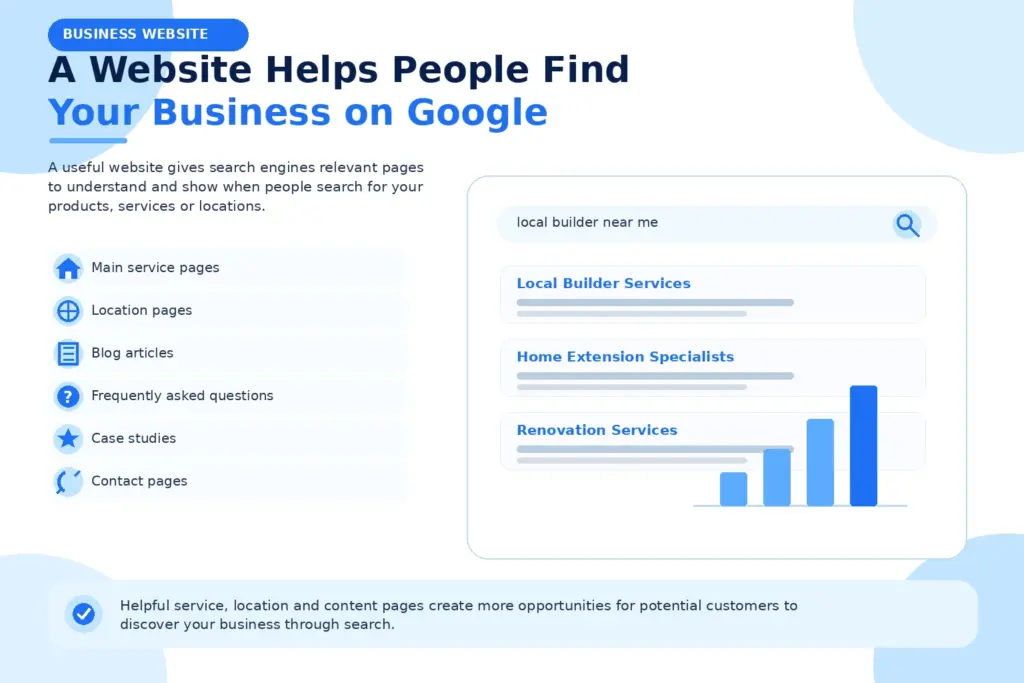
A professional website can support your visibility in search engines such as Google. When people search for products or services related to your business, your website gives search engines useful pages that may appear in relevant results.
Search engine optimisation, commonly known as SEO, focuses on improving your website so search engines and users can better understand its content.
For example, a local business may create individual pages for its main services and areas. These pages can provide useful information to people who are already searching for those services.
Your website may include:
- Main service pages
- Location pages
- Blog articles
- Frequently asked questions
- Case studies
- About information
- Contact pages
The more helpful and relevant your website is, the more opportunities you create for potential customers to discover your business.
5. Your Website Explains Your Services Clearly
Customers should not have to guess what your business provides. A professional website gives you enough space to explain each service properly.
Instead of listing every service in one short paragraph, you can create dedicated pages that answer the questions customers commonly have.
A useful service page can explain:
- What the service includes
- Who the service is suitable for
- How the process works
- Where the service is available
- Common customer questions
- How to request a quote
- How to contact the business
Clear service information can save customers time and help bring better-informed enquiries into your business.
6. A Professional Website Creates a Strong First Impression
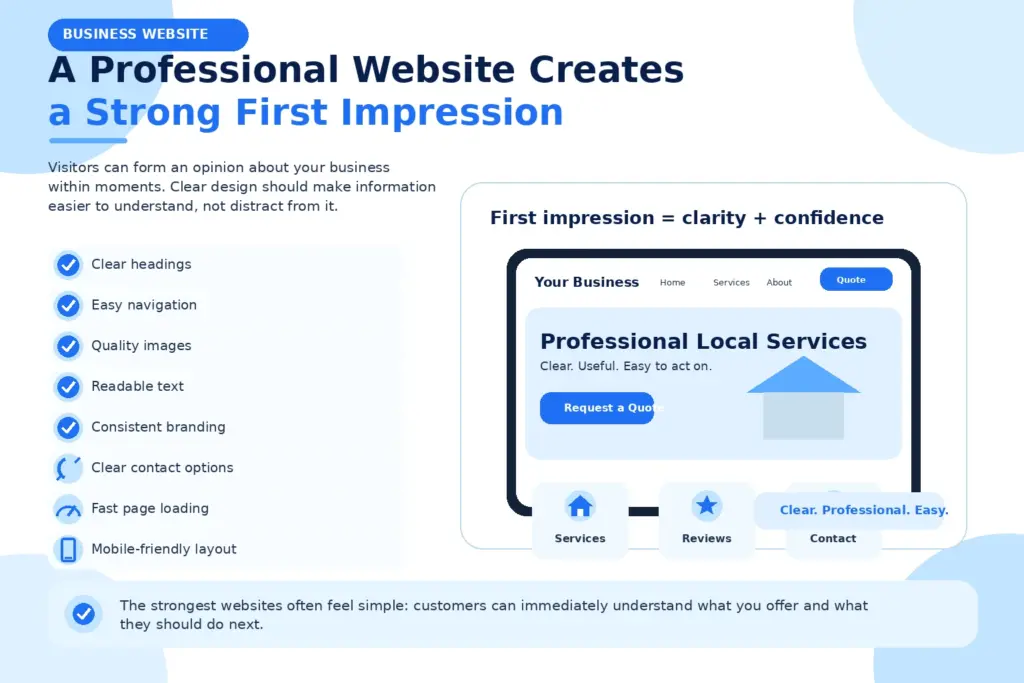
A potential customer may form an opinion about your business within moments of visiting your website. The way your pages look, load and communicate can influence whether that visitor continues browsing or leaves.
Your website does not need complicated animations or unnecessary design features. It needs to feel clear, professional and easy to use. Good design should make information easier to understand rather than distracting visitors from what they came to find.
A strong first impression often comes from simple things such as:
- Clear headings
- Easy navigation
- Quality images
- Readable text
- Consistent branding
- Clear contact options
- Fast page loading
- Mobile-friendly layouts
7. Your Website Gives You Control Over Your Online Presence
Social media platforms can be useful for reaching customers, but your business does not control those platforms. Algorithms, features and account rules can change at any time.
Your website gives you much greater control over how your business is presented online. You can decide which services to highlight, what information customers see and what action you want them to take next.
Social media can then support your website by sending interested people towards a platform that is focused entirely on your business. This creates a stronger digital foundation than relying only on third-party platforms.
8. A Website Makes It Easier for Customers to Contact You
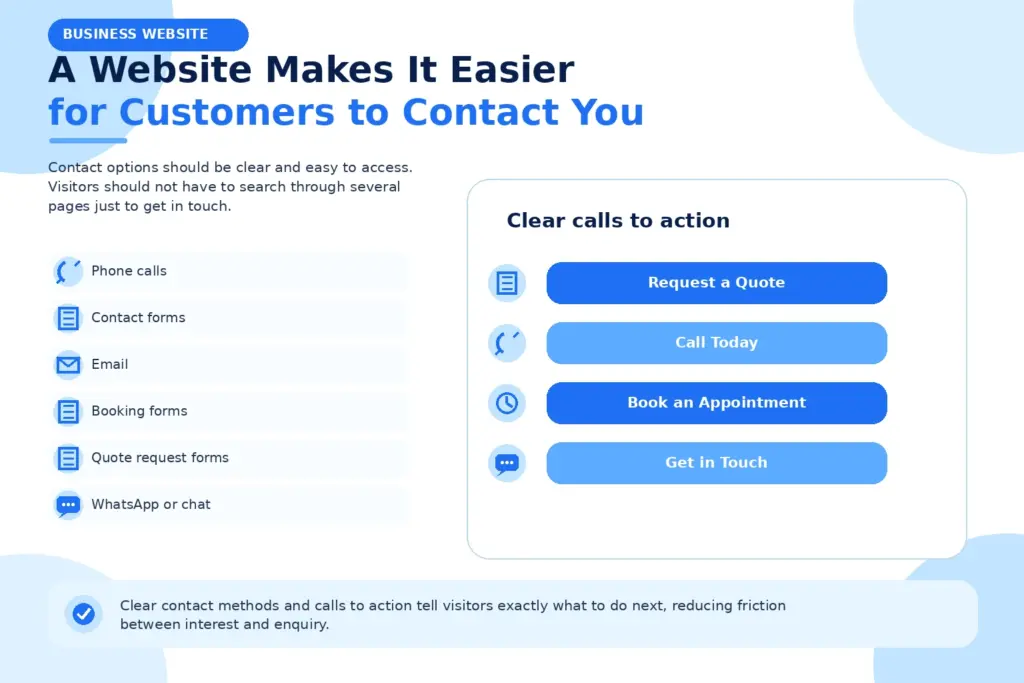
Potential customers should never have to search through several pages to find out how to get in touch. A professional website should make contact options clear and easy to access.
You can provide different contact methods depending on how your customers prefer to communicate.
These could include:
- Phone calls
- Contact forms
- Booking forms
- Quote request forms
- Online chat
Clear calls to action can guide people towards these options throughout the website. For example, buttons such as Request a Quote, Call Today, Book an Appointment or Get in Touch tell visitors exactly what to do next.
9. Your Website Can Generate More Enquiries
A website should do more than provide information. It should also help turn interested visitors into potential customers. This process is often called conversion. A conversion happens when a visitor completes an action that matters to your business.
This could include:
- Making a phone call
- Completing a form
- Booking an appointment
- Requesting a quote
- Buying a product
- Signing up for emails
A professional website supports these actions by making the customer journey simple. Visitors should understand what you offer, why it is relevant to them and how they can take the next step.
10. A Professional Website Supports Your Digital Marketing
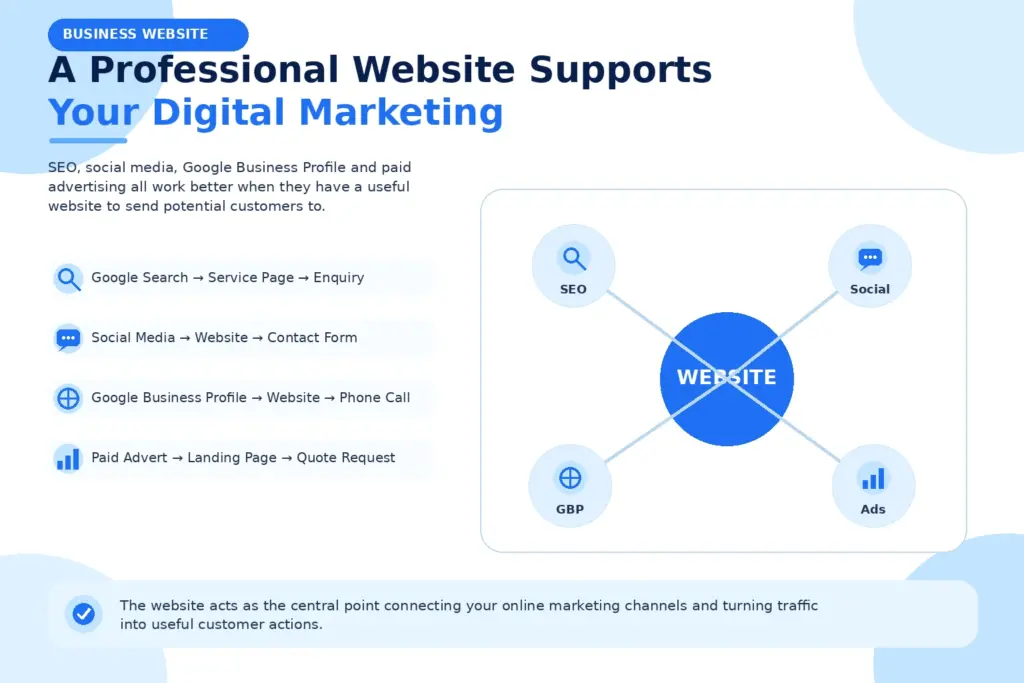
Most digital marketing channels work better when they have a strong website supporting them. Social media, SEO, Google Business Profile and paid advertising can all direct people towards your website.
If the website is confusing or provides very little information, some of that marketing traffic may be wasted. A strong website gives your digital marketing somewhere useful to send potential customers.
For example:
Google Search → Service Page → Enquiry
Social Media → Website → Contact Form
Google Business Profile → Website → Phone Call
Paid Advert → Landing Page → Quote Request
The website acts as the central point connecting different areas of your online marketing.
11. Your Website Can Support Local Customers
For local service businesses, a professional website can help customers understand exactly where services are available. You can create clear location information and relevant service pages for the areas your business genuinely covers.
This is useful for businesses such as:
- Builders
- Electricians
- Plumbers
- Kitchen installers
- Bathroom companies
- Waste services
- Landscapers
- Cleaning companies
- Property services
Customers often want to know whether a company covers their area before spending time making contact. Providing this information clearly can make their decision easier.
12. A Professional Website Works With Your Google Business Profile
Your Google Business Profile can help people discover your business through Google Search and Maps. Your website can then provide the detailed information that may not fit within the profile itself.
Someone might discover your business through your Google listing, read a few reviews and then visit your website to learn more. Google Business Profile and your website can therefore support each other as part of your wider online presence.
Your website can provide additional information about:
- Individual services
- Service areas
- Your business
- Common questions
- Customer experiences
- Contact options
13. A Website Helps You Display Customer Reviews
Potential customers often want proof that other people have had a positive experience with your business. Your website gives you a place to include genuine reviews and testimonials throughout the customer journey.
You might include reviews on:
- Your homepage
- Service pages
- Location pages
- Contact page
- Dedicated review pages
- Relevant case studies
Reviews can be particularly helpful near calls to action because they provide additional reassurance before somebody makes contact.
14. Your Website Can Answer Common Customer Questions
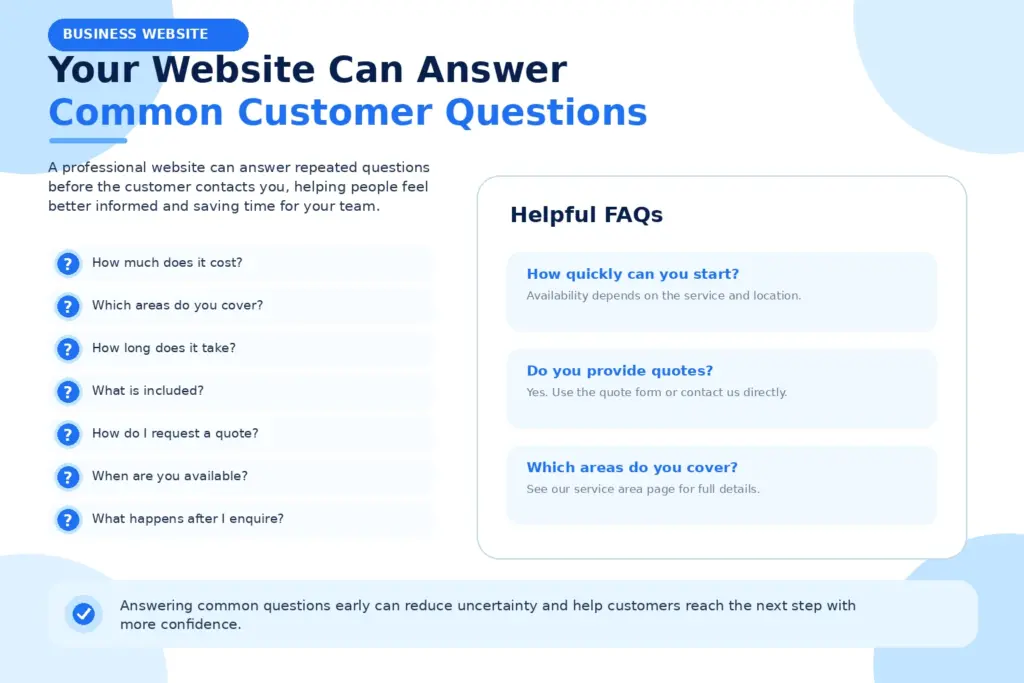
Customers often ask the same questions before buying a product or booking a service. A professional website allows you to answer these questions before the customer even contacts you.
Common questions might include:
- How much does the service cost?
- Which areas do you cover?
- How long does the process take?
- What is included?
- How can I request a quote?
- When are you available?
- What happens after I enquire?
Answering these questions can save time for both the customer and your team. It can also help visitors feel better informed before taking the next step.
15. A Mobile-Friendly Website Is Essential
Many potential customers will visit your website using a mobile phone. Your website therefore needs to provide a good experience on smaller screens. A mobile-friendly website should be easy to navigate without visitors needing to zoom in or struggle to press buttons.
Important elements should remain clear, including:
- Menus
- Phone numbers
- Contact forms
- Images
- Headings
- Service information
- Calls to action
Customers should be able to move through your website smoothly regardless of the device they use.
16. Website Speed Can Affect the Customer Experience
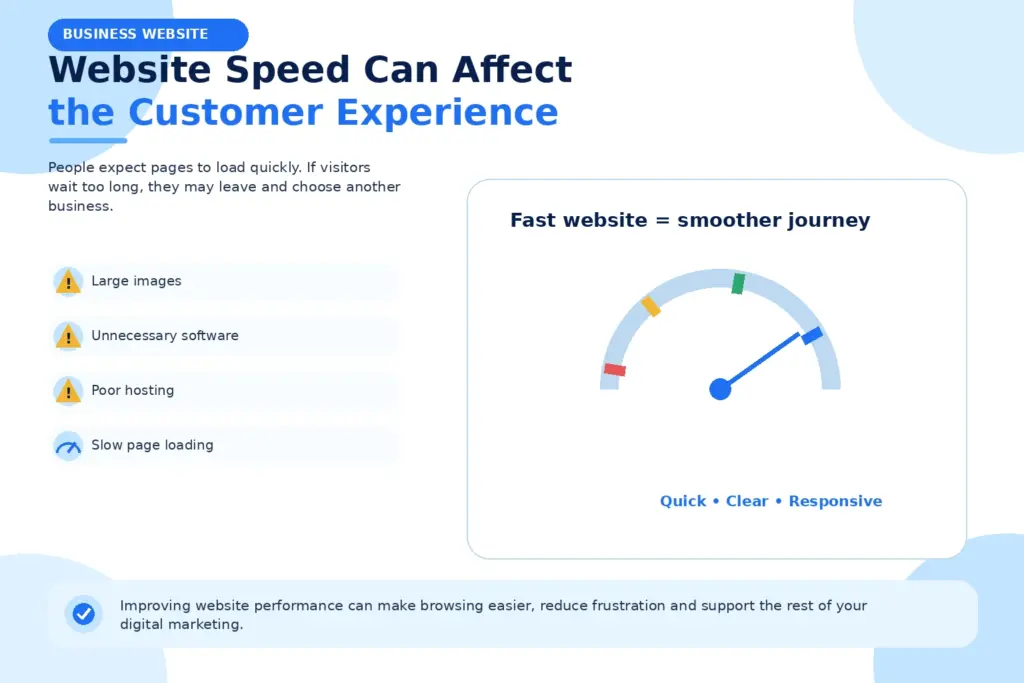
People expect websites to load quickly. If visitors have to wait too long for pages to appear, they may leave and choose another business. Large images, unnecessary software and poor hosting can all affect website performance.
A professional website should be built with performance in mind. Improving website speed can make browsing easier and help visitors move through your pages without unnecessary delays. A faster experience can also support other areas of your digital marketing.
17. Your Website Gives You Valuable Marketing Data
A professional website can also help you understand how people interact with your business online. Analytics and tracking tools can provide useful information about website activity.
Depending on your setup, you may be able to measure:
- Website visitors
- Popular pages
- Traffic sources
- Form submissions
- Phone call actions
- Customer journeys
- Conversions
- Device types
This information helps you understand what is working and where improvements may be needed. Instead of making marketing decisions based only on assumptions, you can use real information about customer behaviour.
18. A Website Can Grow With Your Business
Your business may change over time. You might introduce new services, expand into new areas or target different types of customers. A well-structured website can grow alongside these changes. This makes your website a long-term business asset rather than a one-time project.
You can add:
- New service pages
- New locations
- Blog content
- Case studies
- Customer resources
- New contact options
- Additional landing pages
19. Your Competitors Probably Have Websites
If customers compare several businesses online, your website can directly influence how your company is perceived. A competitor with clear service information, strong customer reviews and an easy contact process may appear more appealing than a business with little or no online presence.
You do not need to copy your competitors. Instead, look at what your customers actually need and make sure your website gives them useful information quickly. A better customer experience can become a meaningful competitive advantage.
20. A Professional Website Can Save Your Business Time
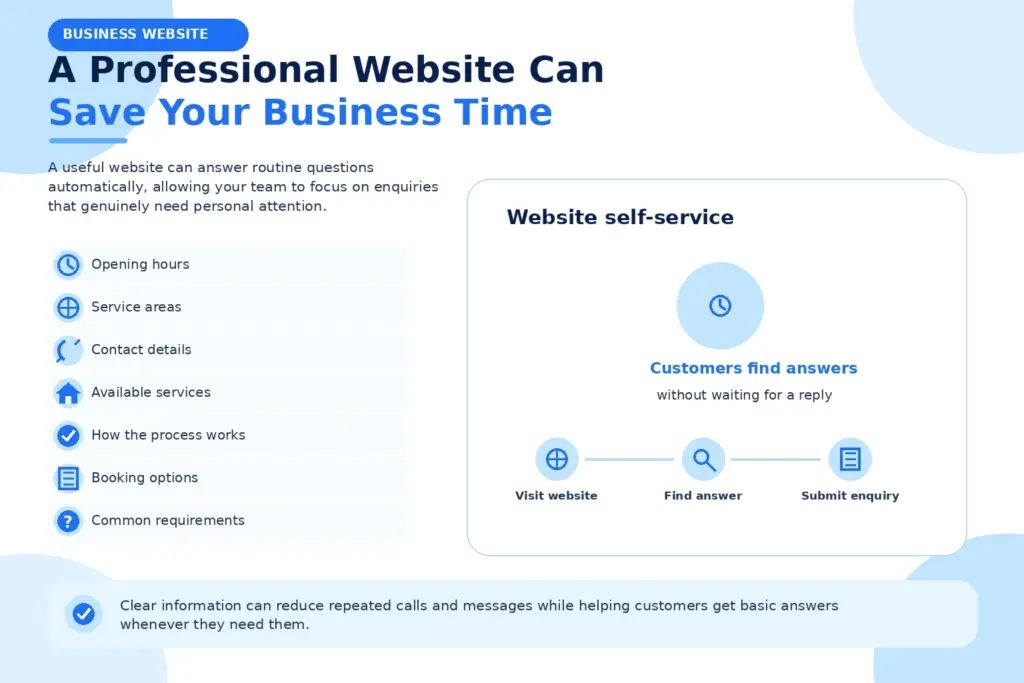
A useful website can answer many questions that would otherwise need to be handled by phone, email or message. Customers can find information themselves without waiting for a response. Your team can then spend more time focusing on enquiries that genuinely require personal attention.
This can reduce repeated questions about:
- Opening hours
- Service areas
- Contact details
- Available services
- How the process works
- Booking options
- Common requirements
What Should Every Professional Business Website Include?
Every business is different, but most professional websites need several essential elements. The exact structure should depend on your customers and business goals. The most important thing is making the website useful rather than filling it with unnecessary pages.
A strong starting point includes:
- A clear homepage
- About information
- Individual service pages
- Contact details
- Strong calls to action
- Customer reviews
- Service area information
- Mobile-friendly design
- Secure website connection
- Fast-loading pages
- Clear navigation
- Useful FAQs
Common Website Mistakes to Avoid
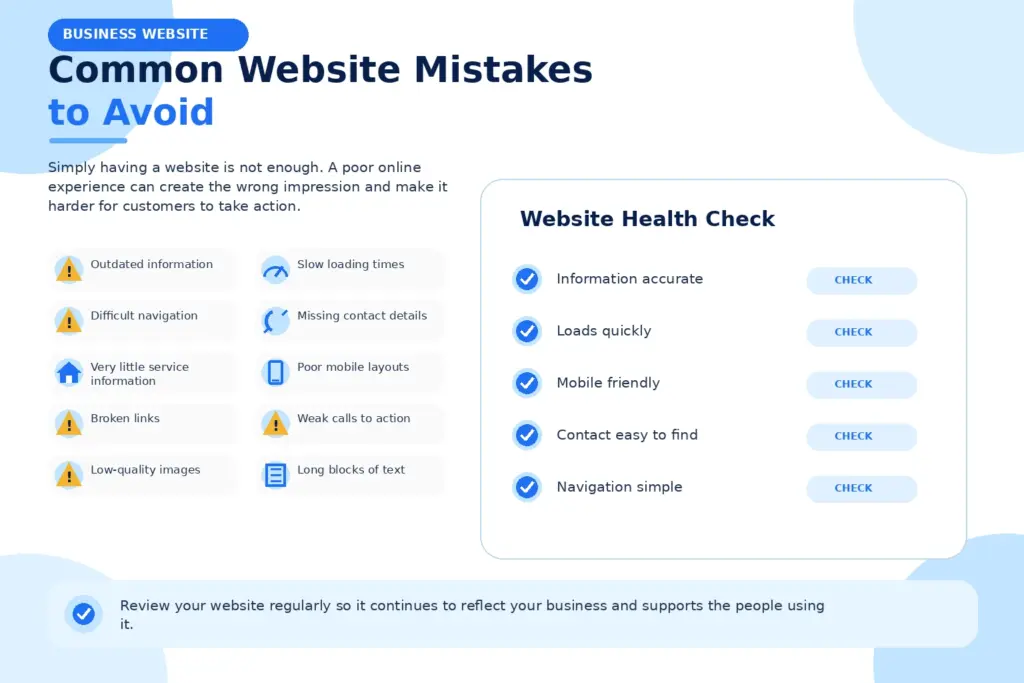
Simply having a website is not enough. A poor online experience can sometimes create the wrong impression. Review your website regularly to make sure it still reflects your business and supports your customers.
Common mistakes include:
- Outdated business information
- Slow loading times
- Difficult navigation
- Missing contact details
- Very little service information
- Poor mobile layouts
- Broken links
- Weak calls to action
- Low-quality images
- Confusing page structures
- Long blocks of difficult text
How Often Should You Update Your Website?
A professional website should not be created and then forgotten. Business information, customer needs and services can change over time. Your website should change with them. Check important pages regularly and update information whenever something changes.
This may include:
- Phone numbers
- Opening hours
- Services
- Service areas
- Team information
- Customer reviews
- Photos
- Pricing information
- Frequently asked questions
Regular updates help keep the website accurate and useful.
Final Website Checklist
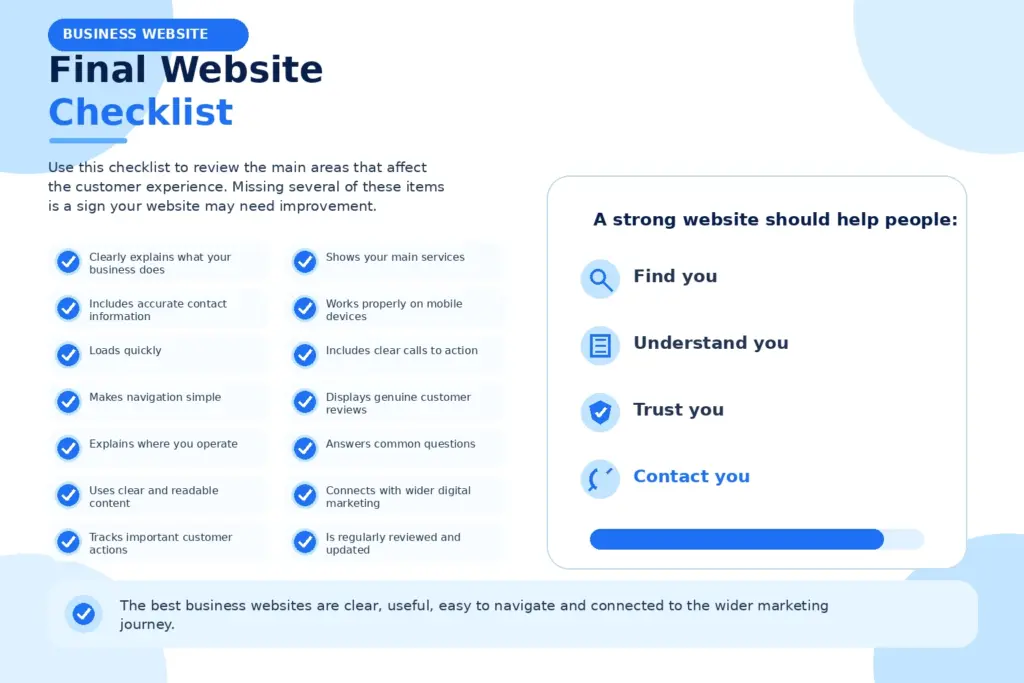
Before deciding whether your business website is doing its job, review the main areas that affect the customer experience. If several of these areas are missing, improving them can create a stronger experience for potential customers.
Make sure your website:
- Clearly explains what your business does
- Shows your main services
- Includes accurate contact information
- Works properly on mobile devices
- Loads quickly
- Includes clear calls to action
- Makes navigation simple
- Displays genuine customer reviews
- Explains where you operate
- Answers common questions
- Uses clear and readable content
- Connects with your wider digital marketing
- Tracks important customer actions
- Is regularly reviewed and updated
Final Thoughts
A professional website gives your business a reliable place to build trust, explain your services and connect with potential customers. It supports everything from Google visibility and local search to social media, advertising and customer enquiries.
Your website should make things easier for the people visiting it. They should be able to understand what you offer, see why your business may be right for them and find a simple way to take the next step.
Most importantly, a website should not sit online without a clear purpose. When it is built around your customers and connected to the rest of your digital marketing, it can become a valuable part of your business growth.
A strong website helps people find you, understand you, trust you and contact you. For businesses competing in an increasingly digital world, that makes a professional website far more than an online brochure.