
Digital marketing is the process of promoting your business online through channels such as Google, your website, social media, email and paid advertising. It helps potential customers find your business, understand what you offer and feel confident enough to get in touch or make a purchase.
For businesses of all sizes, a clear digital marketing strategy can increase visibility, build trust, generate more enquiries and support long-term growth. The way people find and choose businesses has changed. Before making a purchase, booking a service or requesting a quote, most customers now spend time online looking for information.
They search on Google, read reviews, visit websites, browse social media and compare different businesses before deciding who to contact. If your business is difficult to find online, potential customers may choose a competitor instead.
What Is Digital Marketing?
Digital marketing is the process of promoting a business, product or service through online channels. Instead of relying only on traditional methods such as leaflets, newspapers or printed advertising, digital marketing allows businesses to connect with customers through the internet.
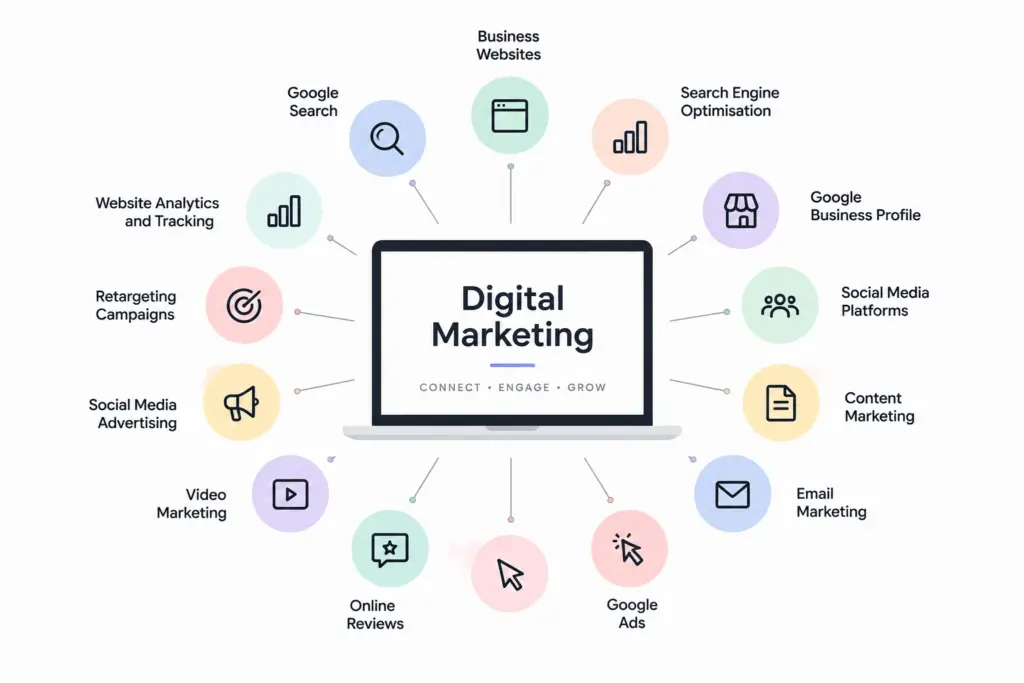
Common digital marketing channels include:
- Business websites
- Google Search
- Search engine optimisation
- Google Business Profile
- Social media platforms
- Content marketing
- Email marketing
- Google Ads
- Social media advertising
- Online reviews
- Video marketing
- Retargeting campaigns
- Website analytics and tracking
Each channel has a different purpose. Your website gives people information about your business. SEO helps potential customers discover that website through search engines. Social media increases awareness, while online reviews help build trust.
Paid advertising can bring targeted visitors to your business quickly, while analytics helps you understand what those visitors do once they arrive. Digital marketing becomes much more effective when these channels work together rather than operating separately.
Why Is Digital Marketing Important for Businesses?
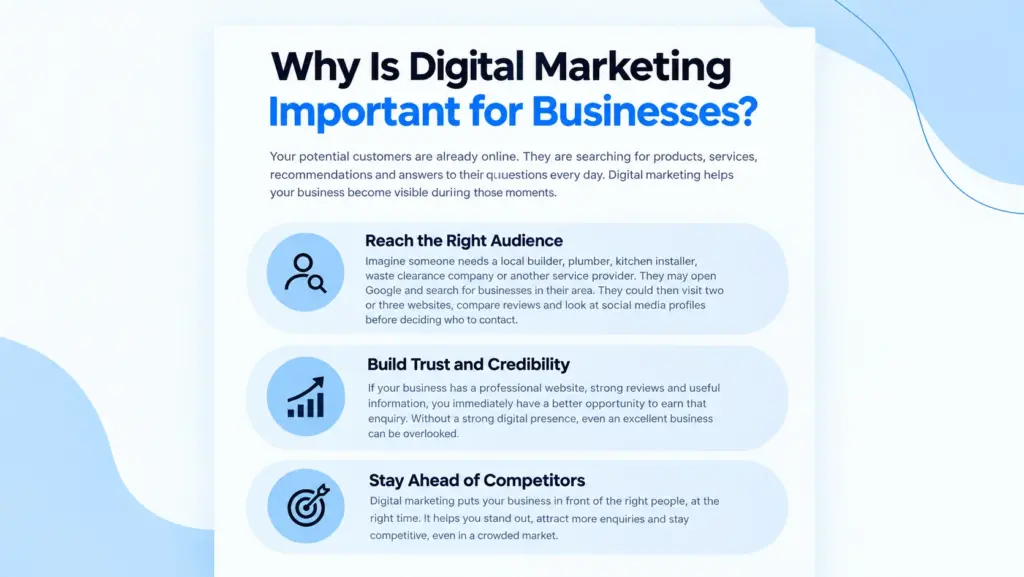
Your potential customers are already online. They are searching for products, services, recommendations and answers to their questions every day. Digital marketing helps your business become visible during those moments.
Imagine someone needs a local builder, plumber, kitchen installer, waste clearance company or another service provider. They may open Google and search for businesses in their area. They could then visit two or three websites, compare reviews and look at social media profiles before deciding who to contact.
If your business has a professional website, strong reviews and useful information, you immediately have a better opportunity to earn that enquiry. Without a strong digital presence, even an excellent business can be overlooked.
Digital Marketing Helps People Find Your Business
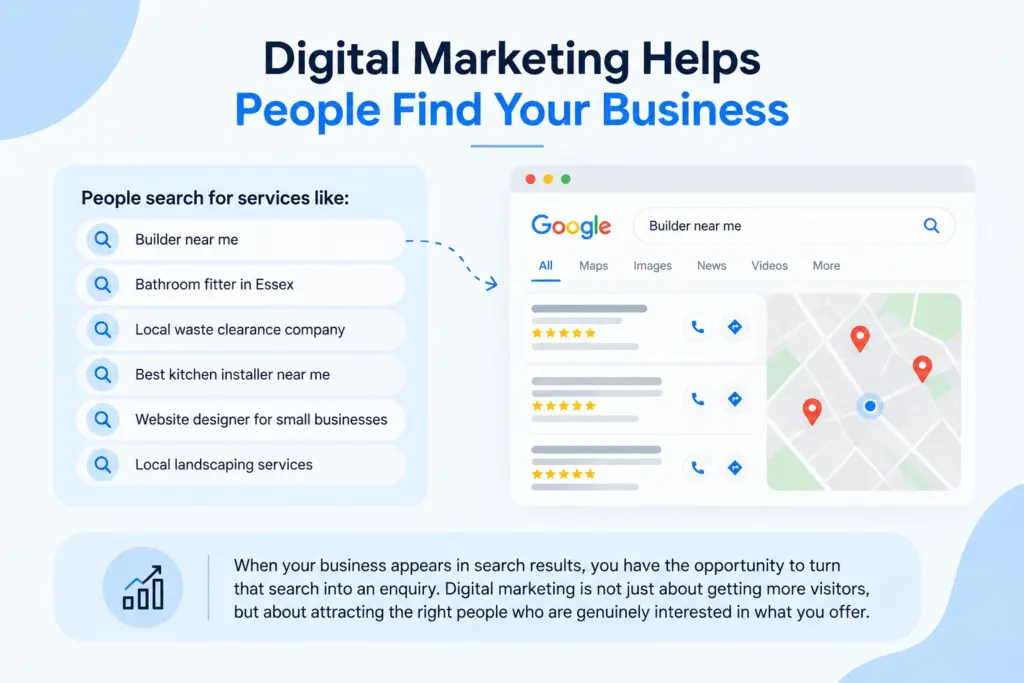
One of the biggest benefits of digital marketing is visibility. Customers cannot contact a business they cannot find. SEO, Google Business Profile optimisation, social media content and online advertising can all help increase your presence across the internet.
For example, somebody might search:
- Builder near me
- Bathroom fitter in Essex
- Local waste clearance company
- Best kitchen installer near me
- Website designer for small businesses
- Local landscaping services
If your business appears when people search for services like these, you have an opportunity to turn that search into an enquiry. The goal is not simply to attract more website visitors. It is to attract people who are genuinely interested in what your business provides.
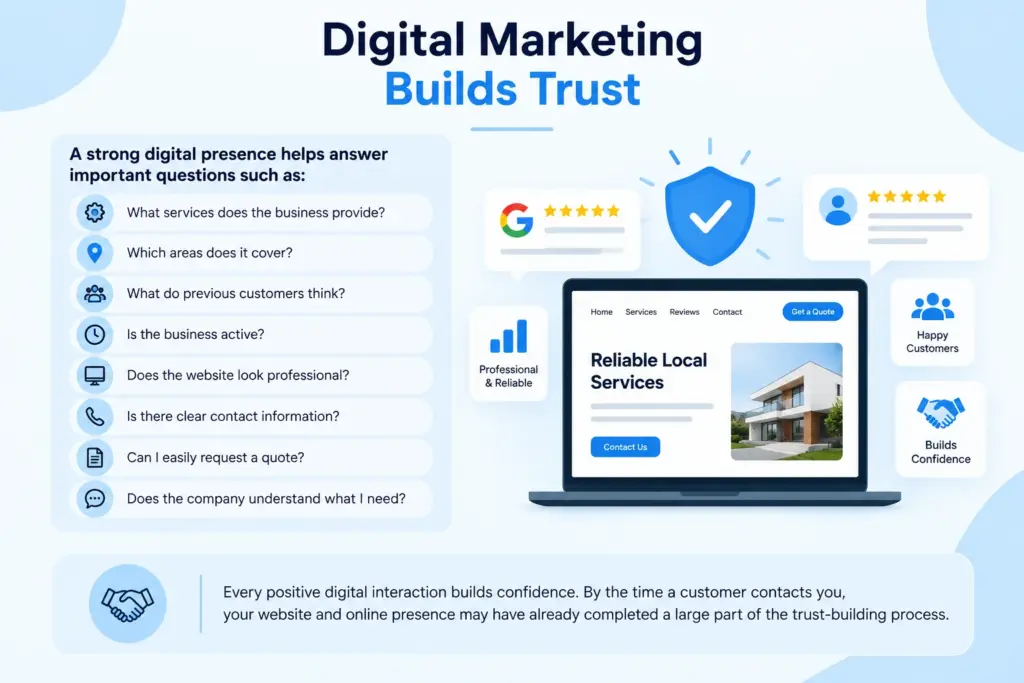
Digital Marketing Builds Trust
People rarely choose a business based on one piece of information. Before making contact, customers often look for signs that a company is genuine, professional and reliable. They may check your website, reviews, social media accounts and Google Business Profile.
A strong digital presence helps answer important questions such as:
- What services does the business provide?
- Which areas does it cover?
- What do previous customers think?
- Is the business active?
- Does the website look professional?
- Is there clear contact information?
- Can I easily request a quote?
- Does the company understand what I need?
Every positive digital interaction builds confidence. By the time a customer contacts you, your website and online presence may have already completed a large part of the trust-building process.
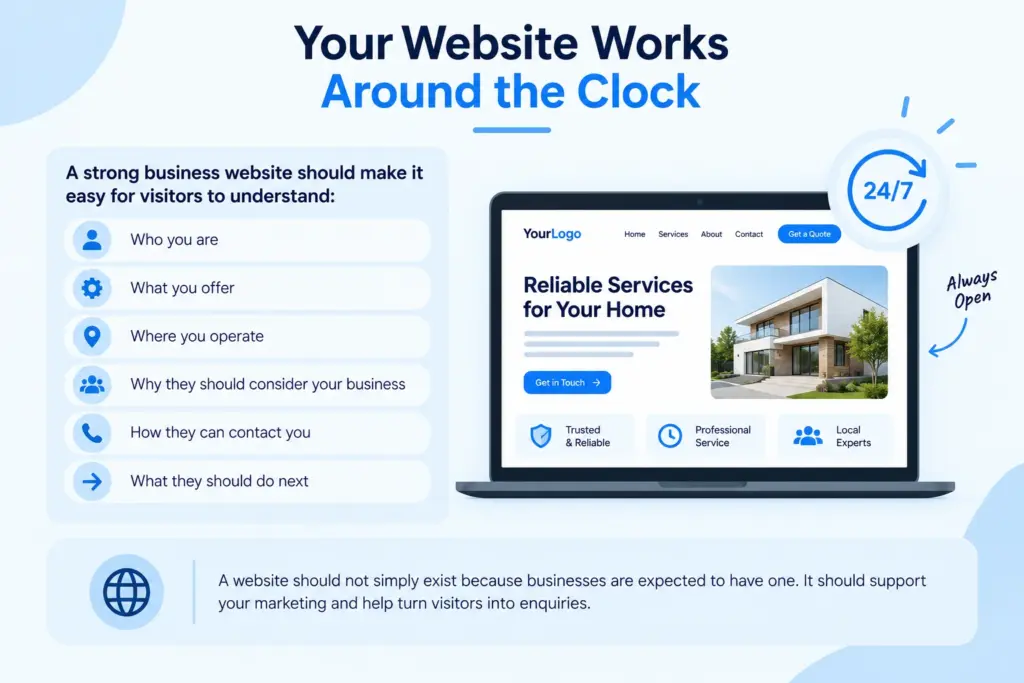
Your Website Works Around the Clock
A good website is one of the most important parts of digital marketing. Unlike a physical office, your website does not close at the end of the working day. Potential customers can visit it in the morning, during their lunch break or late at night. Your website can explain your services, answer common questions and provide ways for customers to contact you at any time.
A strong business website should make it easy for visitors to understand
- Who you are
- What you offer
- Where you operate
- Why they should consider your business
- How they can contact you
- What they should do next
A website should not simply exist because businesses are expected to have one. It should support your marketing and help turn visitors into enquiries.
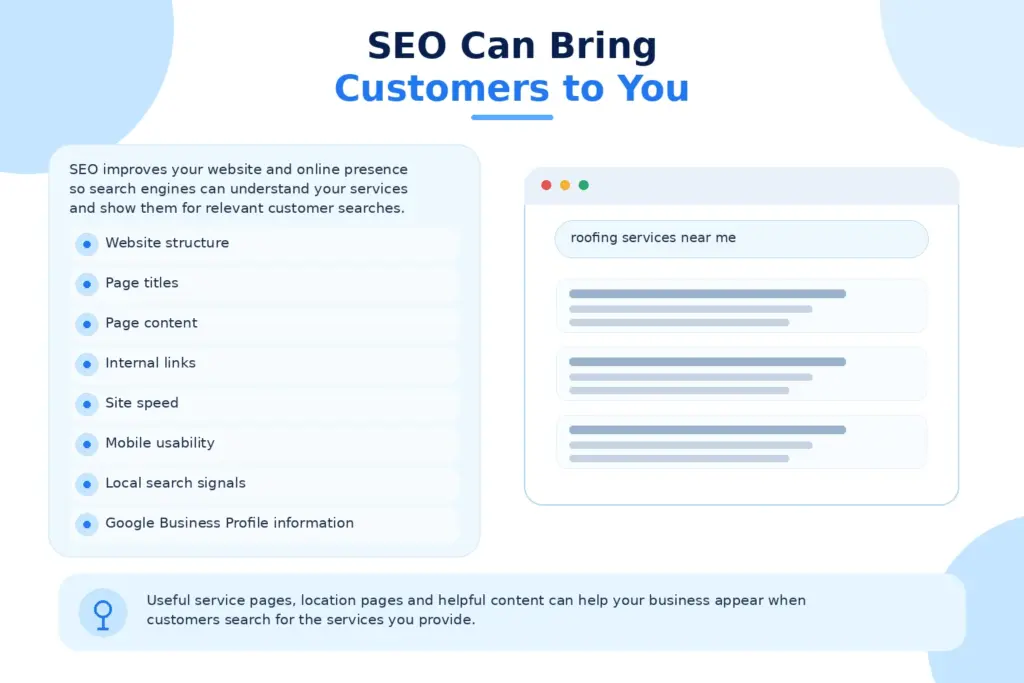
SEO Can Bring Customers to You
Search engine optimisation is an important part of digital marketing. SEO involves improving your website and online presence so search engines can better understand your business and its services. When done properly, SEO can help your website appear when potential customers search for relevant products or services.
For example, a roofing company would want to appear when somebody searches for roofing services in the areas it covers. This can involve creating useful service pages, location pages, blog articles and other helpful content that answers real customer searches.
SEO can also include improving:
- Website structure
- Page titles
- Page content
- Internal links
- Site speed
- Mobile usability
- Local search signals
- Google Business Profile information
Social Media Keeps Your Business Visible
Social media gives businesses another way to stay connected with potential customers. Platforms such as Facebook, Instagram, TikTok, LinkedIn and YouTube can help businesses increase awareness and stay visible.
However, simply creating an account is not enough. Your content should have a purpose.Useful social media content might include:
- Helpful tips
- Customer questions
- Project updates
- Service information
- Customer reviews
- Industry advice
- Short educational videos
- Business updates
- Frequently asked questions
- Special offers
The goal is not always to make an immediate sale. Sometimes a person may see your content several times before they need your service. When that need appears, they are more likely to remember a business they already recognise.
Content Marketing Answers Customer Questions
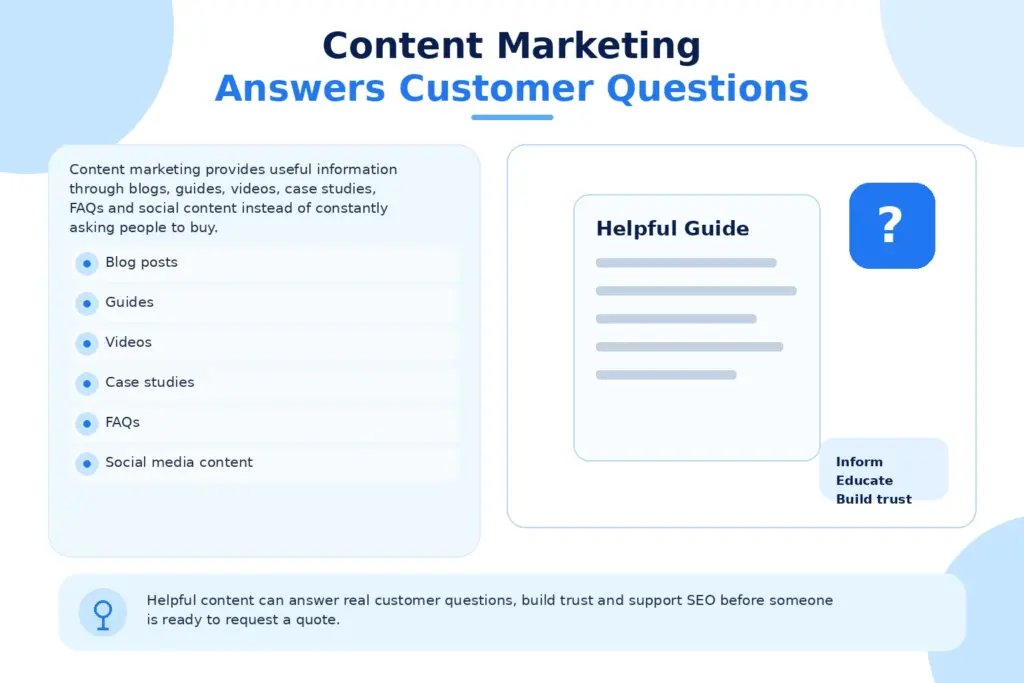
Good digital marketing provides useful information instead of constantly asking people to buy something. This is where content marketing becomes valuable. Content marketing can include blog posts, guides, videos, case studies, FAQs and social media content.
Imagine a homeowner searching for information about the average cost of a bathroom renovation. A bathroom company that publishes a useful guide explaining prices, timelines and common considerations has an opportunity to appear during that research.
The reader may not be ready to request a quote immediately, but the business has already started building trust. Helpful content can also support SEO by giving search engines more information about your services and expertise.
Online Reviews Influence Buying Decisions
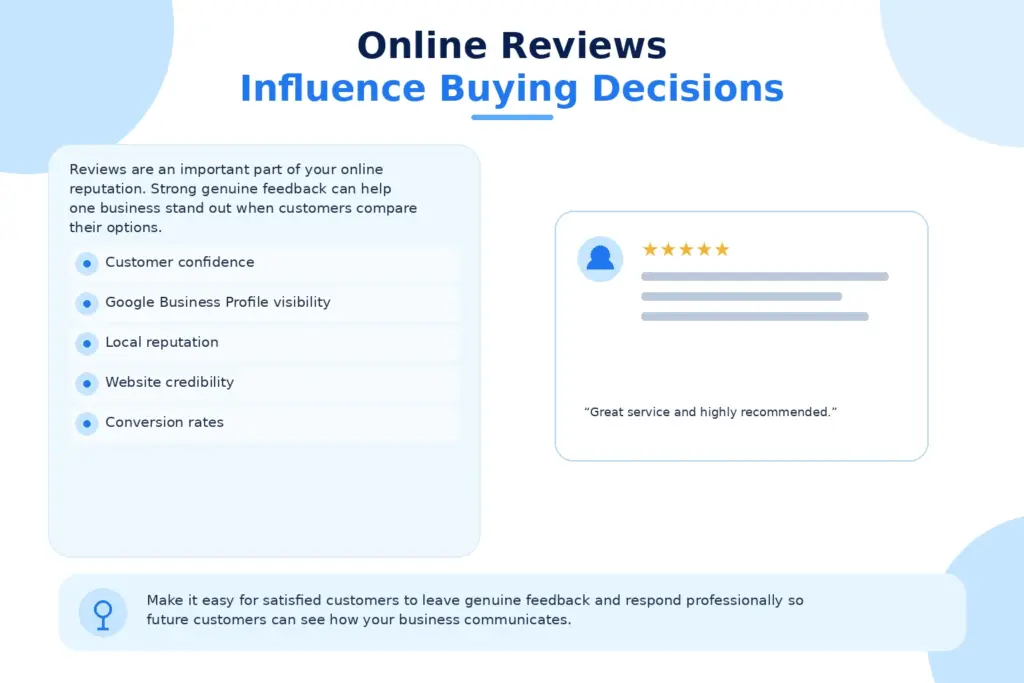
Customer reviews are an important part of your online reputation. When people compare several businesses, strong reviews can help one company stand out. Positive reviews show potential customers that other people have already used the business and had a good experience.
Businesses should make it easy for satisfied customers to leave genuine feedback. Businesses should also respond professionally to reviews. A thoughtful response demonstrates that customer feedback matters and shows potential customers how the business communicates.
Reviews can strengthen:
- Customer confidence
- Google Business Profile visibility
- Local reputation
- Website credibility
- Conversion rates
Digital Marketing Makes Results Easier to Measure
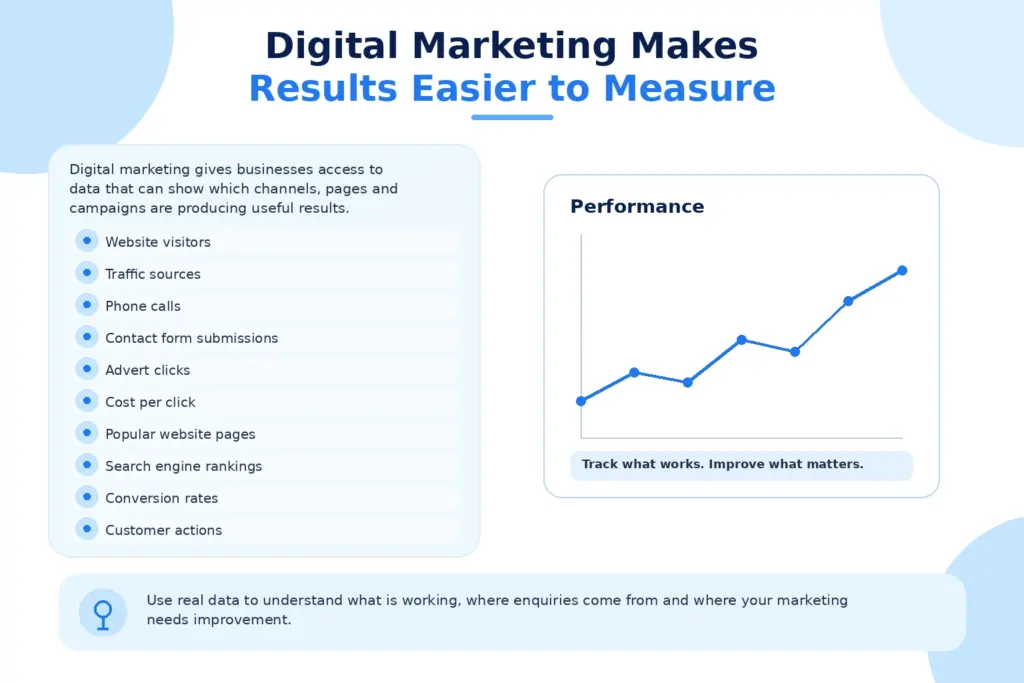
One major advantage of digital marketing is the ability to track performance. With traditional advertising, understanding exactly how many people responded to a particular campaign can sometimes be difficult. Digital marketing gives businesses access to much more data.
Depending on the tools being used, you can measure:
- Website visitors
- Traffic sources
- Phone calls
- Contact form submissions
- Advert clicks
- Cost per click
- Popular website pages
- Search engine rankings
- Conversion rates
- Customer actions
- Advertising performance
This information helps businesses make better decisions. Instead of continuing to spend money because something feels effective, you can look at actual data and understand what is producing results.
Paid Advertising Can Generate Faster Visibility
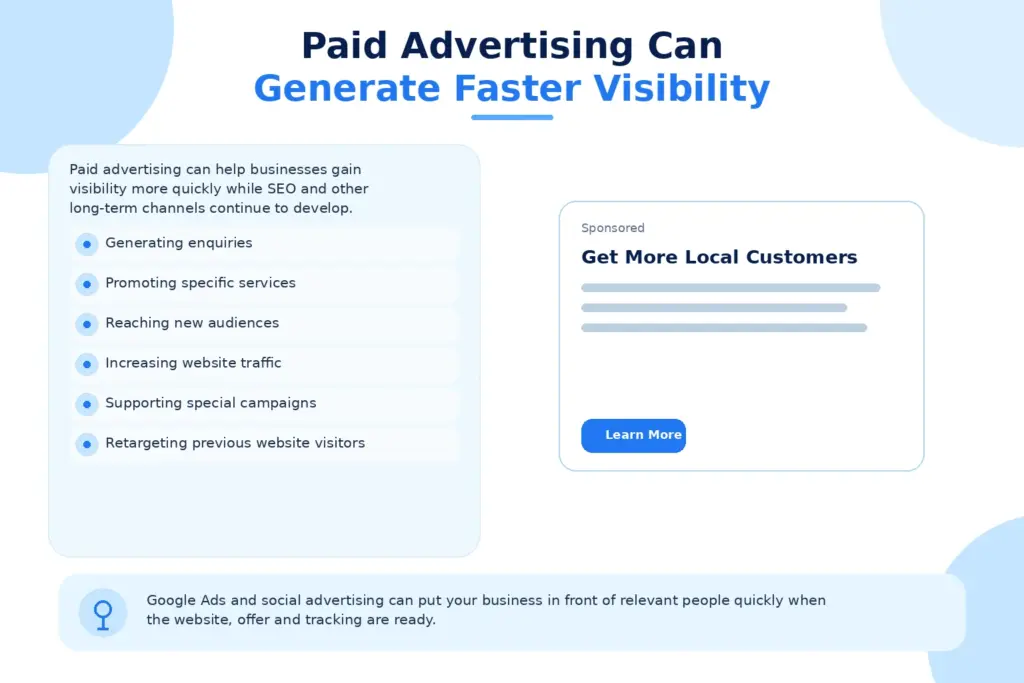
SEO can be valuable for long-term growth, but businesses may also want faster visibility. This is where paid advertising can help. Google Ads allows businesses to appear for selected searches, while platforms such as Facebook and Instagram allow businesses to reach audiences based on different interests and behaviours.
Paid advertising can be useful for:
- Generating enquiries
- Promoting specific services
- Reaching new audiences
- Increasing website traffic
- Supporting special campaigns
- Retargeting previous website visitors
Digital Marketing Helps Small Businesses Compete
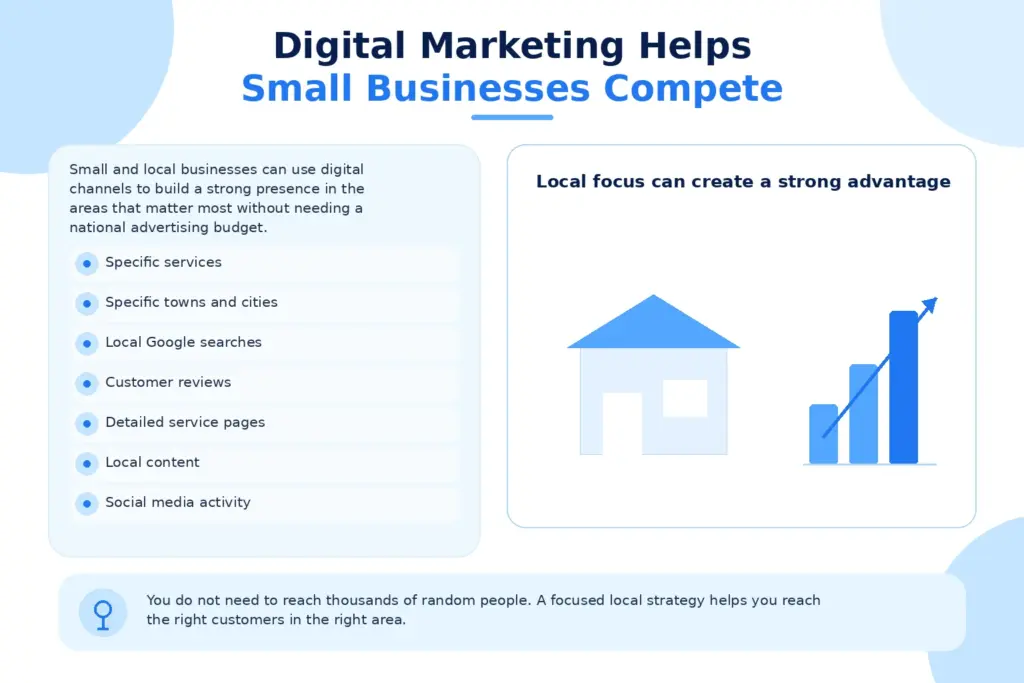
Digital marketing is not only for large companies with huge budgets. Small and local businesses can also use digital channels to compete effectively. A smaller business might not have the advertising budget of a national company, but it can still build a strong presence within its local area.
For example, a local business can focus on:
- Specific services
- Specific towns and cities
- Local Google searches
- Customer reviews
- Detailed service pages
- Local content
- Social media activity
This focused approach can help a smaller business become highly relevant to customers searching within its target area. You do not always need to reach thousands of random people. You need to reach the right people.
Digital Marketing Supports the Customer Journey
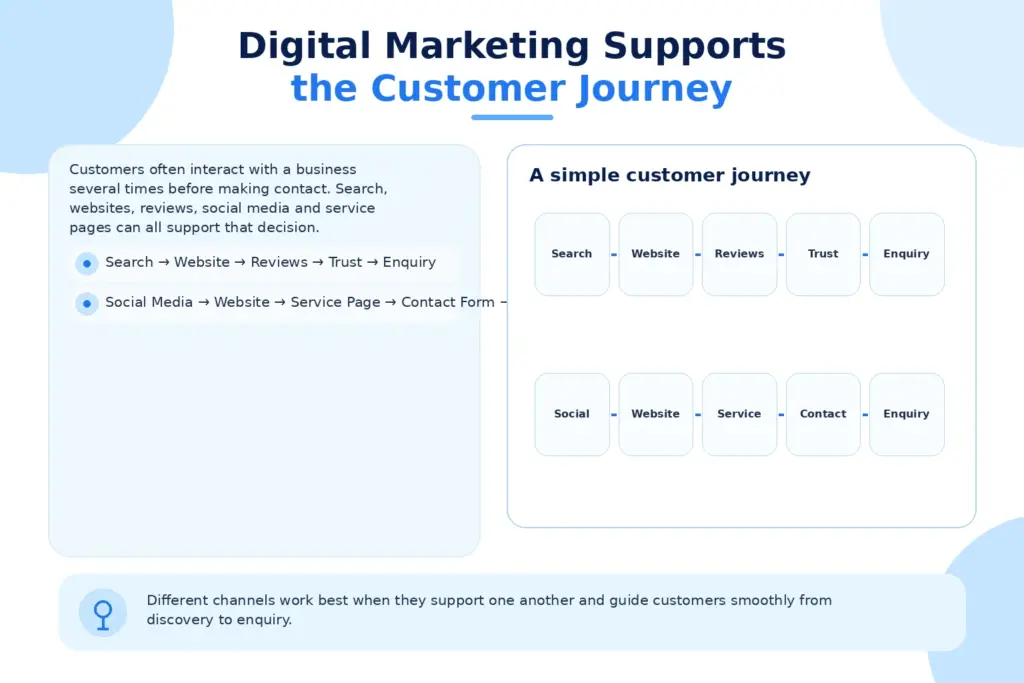
Most customers do not discover a business and immediately make a purchase. They move through several stages. A person might first discover your company through Google. They may then visit your website, leave, see one of your social posts a few days later and eventually return to request a quote.
Another customer might discover your business through social media, read your Google reviews and then visit your website. This is why different areas of digital marketing should support each other.
A simple customer journey might look like this:
Search → Website → Reviews → Trust → Enquiry
Another could look like:
Social Media → Website → Service Page → Contact Form → Enquiry
Understanding this journey helps businesses create marketing that supports customers at every stage.
What Happens If Your Business Ignores Digital Marketing?
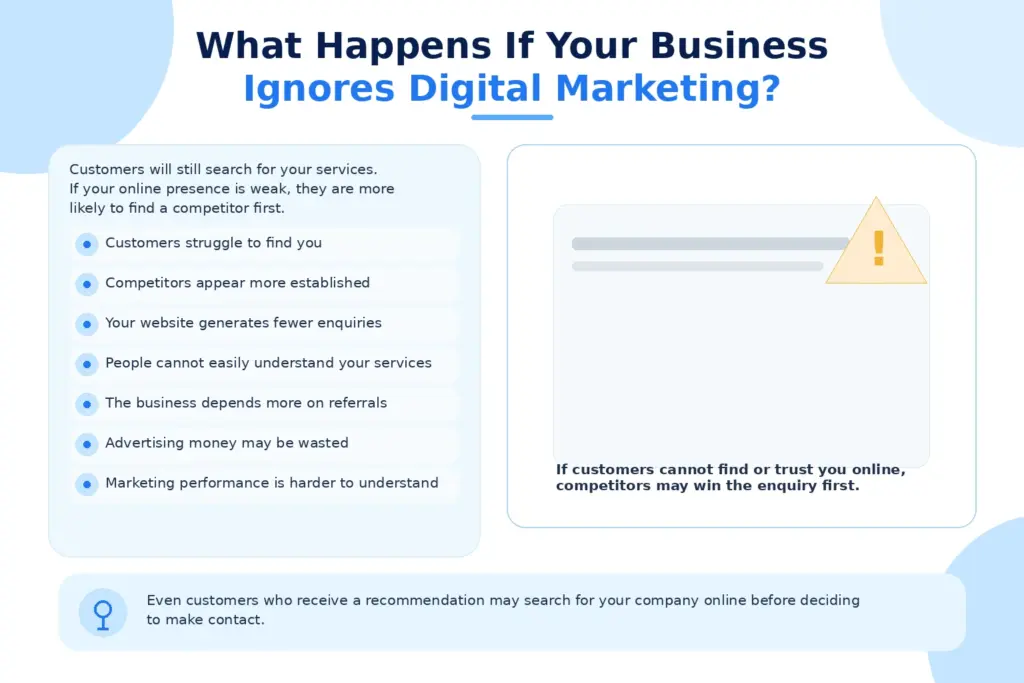
Ignoring digital marketing does not mean people will stop searching for your services. It usually means they are more likely to find another business first. Competitors that consistently improve their websites, SEO, reviews and online content can gradually gain more visibility.
A weak online presence can create several problems:
- Customers struggle to find your business
- Your competitors appear more established online
- Your website generates fewer enquiries
- People cannot easily understand your services
- Your business becomes dependent on referrals
- Advertising money may be wasted
- You have limited information about marketing performance
Even businesses that receive plenty of work through recommendations can benefit from a stronger digital presence. Someone who receives a recommendation may still search for the company online before making contact.
Does Every Business Need Every Type of Digital Marketing?
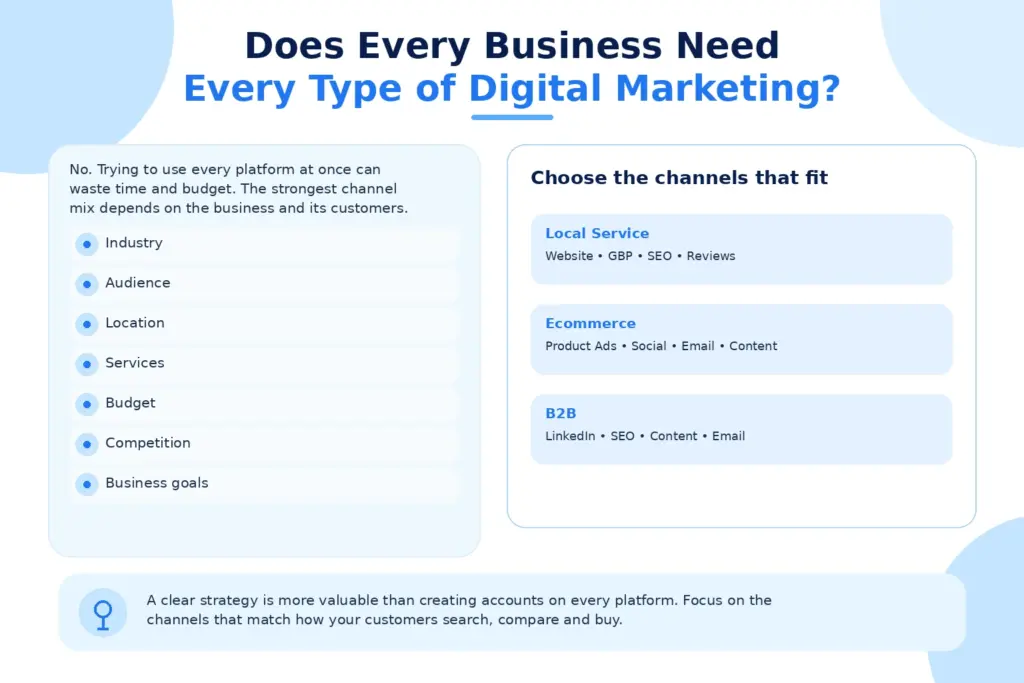
No. One of the biggest digital marketing mistakes is trying to use every platform at once. A local service business may benefit heavily from Google Business Profile, SEO, customer reviews and a strong website.
An ecommerce company may place more focus on product advertising, social media and email campaigns. A B2B company may concentrate more on LinkedIn, SEO, useful content and email marketing. A clear strategy is far more valuable than simply creating accounts on every available platform.
The best strategy depends on your:
- Industry
- Audience
- Location
- Services
- Budget
- Competition
- Business goals
How Should a Small Business Start Digital Marketing?
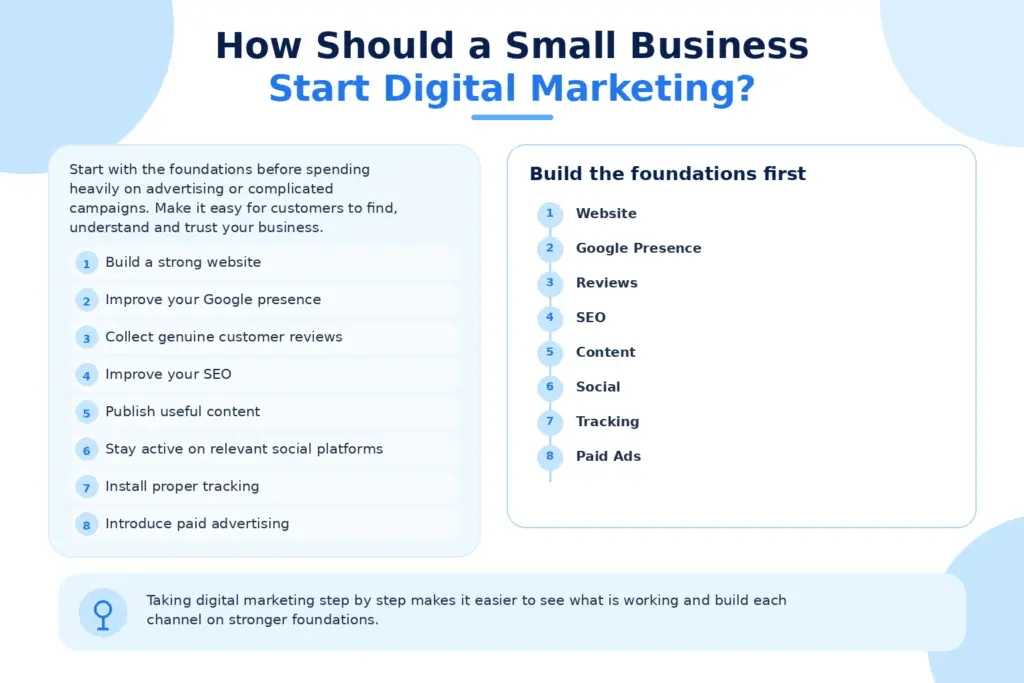
Start with the foundations. Before spending heavily on advertising or complicated campaigns, make sure customers can easily find, understand and trust your business. A sensible starting point could be:
Step 1: Build a Strong Website
Make sure your website clearly explains your services and gives visitors an easy way to contact you. It should also guide them towards the next step, whether that is requesting a quote, booking a service or making an enquiry.
Step 2: Improve Your Google Presence
Create or optimise your Google Business Profile and keep the information accurate. Add up-to-date contact details, opening hours, services, photos and customer reviews to help people find and trust your business.
Step 3: Collect Genuine Customer Reviews
Ask satisfied customers for feedback and build your online reputation. Positive reviews can increase trust, strengthen your credibility and give new customers more confidence to choose your business.
Step 4: Improve Your SEO
Create useful pages around your main services and target locations. This helps search engines understand what your business offers and makes it easier for potential customers to find you when searching online.
Step 5: Publish Useful Content
Answer questions that potential customers regularly ask. Helpful content can build trust, improve your search visibility and make it easier for people to understand your services before they contact you.
Step 6: Stay Active on Relevant Social Platforms
Focus on the platforms your customers are most likely to use. Posting useful and relevant content there can help your business stay visible, build trust and connect with more potential customers.
Step 7: Install Proper Tracking
Measure calls, forms, visits and important actions. Tracking these results helps you understand what is working, where enquiries are coming from and which areas of your digital marketing need improvement
Step 8: Introduce Paid Advertising
Once your website and tracking are ready, advertising can help increase targeted traffic. Taking digital marketing step by step makes it easier to understand what is working.
What Makes a Good Digital Marketing Strategy?
A successful digital marketing strategy should start with the customer. Ask yourself who you want to reach and what those people need before choosing marketing channels. A useful strategy should answer questions such as:
- Who is your ideal customer?
- What problems are they trying to solve?
- What services are most important to your business?
- Which areas do you want to target?
- What are customers searching for online?
- Why should someone choose your business?
- Which marketing channels make the most sense?
- What should visitors do after reaching your website?
- How will results be measured?
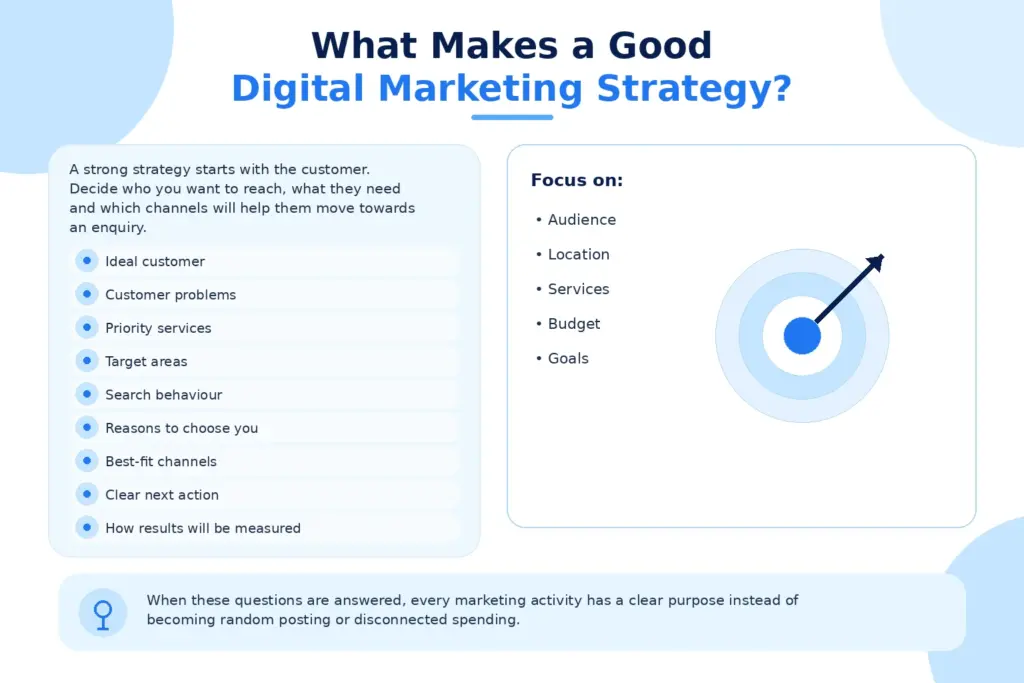
Once those questions are answered, your marketing becomes much more focused. Instead of randomly posting content or spending money on adverts, every activity has a clear reason behind it.
Digital Marketing Is About More Than Getting Traffic
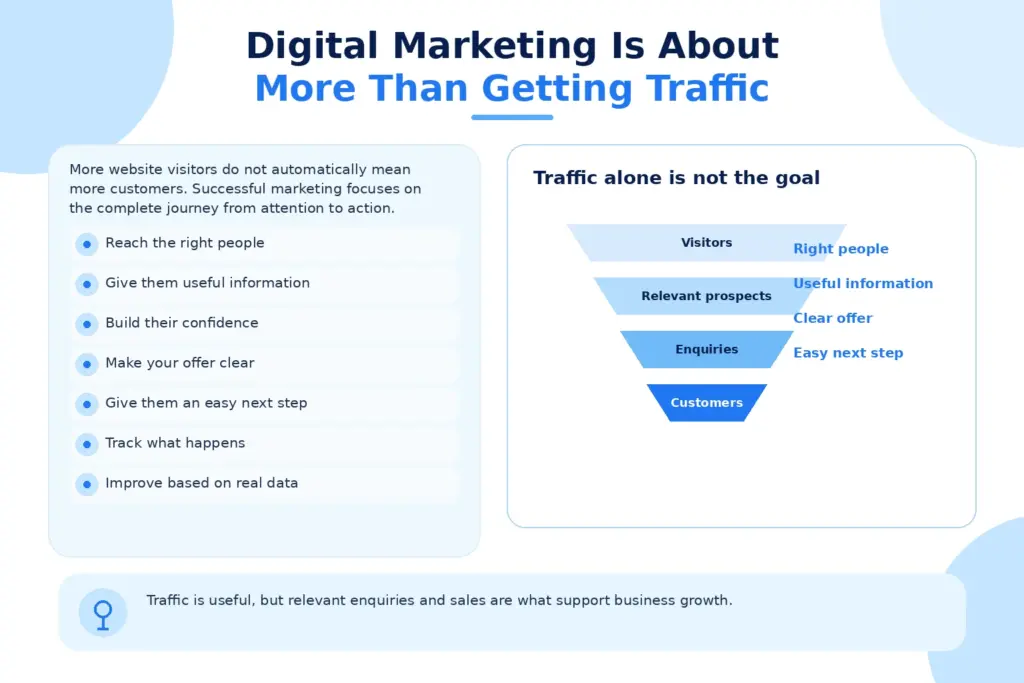
One of the biggest misunderstandings about digital marketing is that more traffic automatically means more customers. It does not. A website could receive thousands of visitors and still generate very few enquiries.
If those visitors are not relevant or the website does not encourage them to take action. Successful digital marketing focuses on the complete journey. Traffic is useful, but enquiries and sales are what support business growth.
You need to:
- Reach the right people.
- Give them useful information.
- Build their confidence.
- Make your offer clear.
- Give them an easy next step.
- Track what happens.
- Improve based on real data.
How Long Does Digital Marketing Take to Work?
There is no single answer because different marketing channels work at different speeds. Paid advertising can sometimes generate traffic quickly, while SEO normally requires more time to build visibility.
Content marketing and reviews also become stronger as your online presence grows. Digital marketing should not be treated as something you try for a few weeks before moving on to another idea. Strong results usually come from improving the foundations, measuring performance and making regular adjustments.
Final Thoughts: Why Your Business Needs Digital Marketing
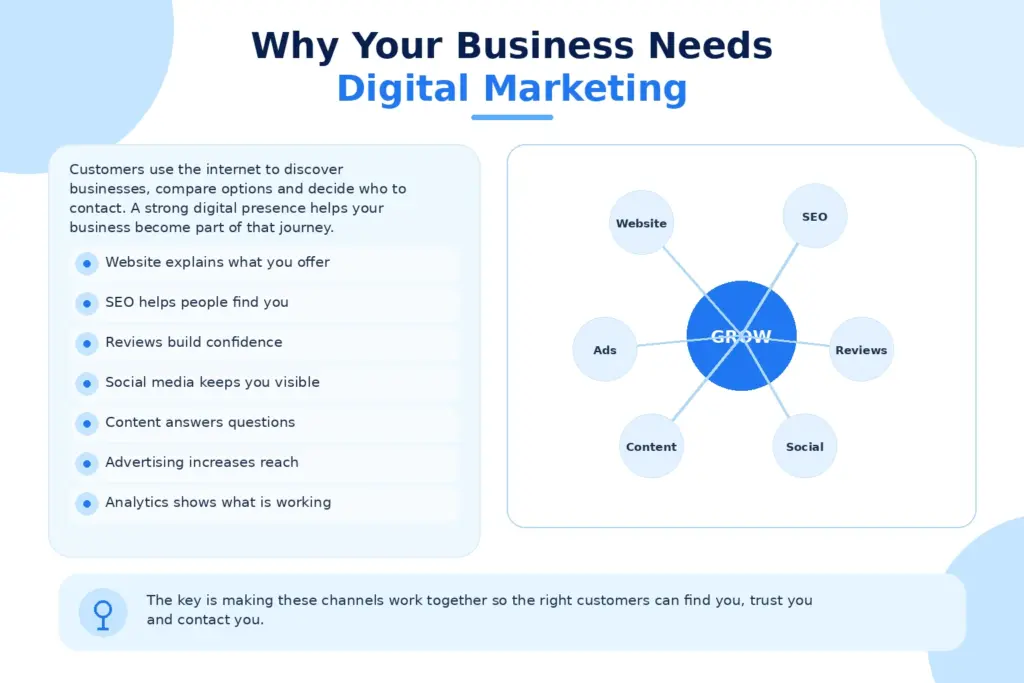
Digital marketing is no longer something businesses should consider only when they have spare time. Customers use the internet every day to discover businesses, compare options and make decisions. A strong digital presence helps make sure your business is part of that journey.
Your website explains what you offer. SEO helps people find you. Reviews build confidence. Social media keeps your business visible. Content answers questions. Advertising increases reach, while analytics shows what is actually working.
The key is making these channels work together. You do not need to use every marketing platform available. You need a clear plan that helps the right customers find you, trust you and contact you.
Start with strong foundations, focus on the channels that matter to your customers and measure the results. When digital marketing is approached this way, it becomes more than online promotion. It becomes a practical system for creating visibility, generating enquiries and supporting the long-term growth of your business.