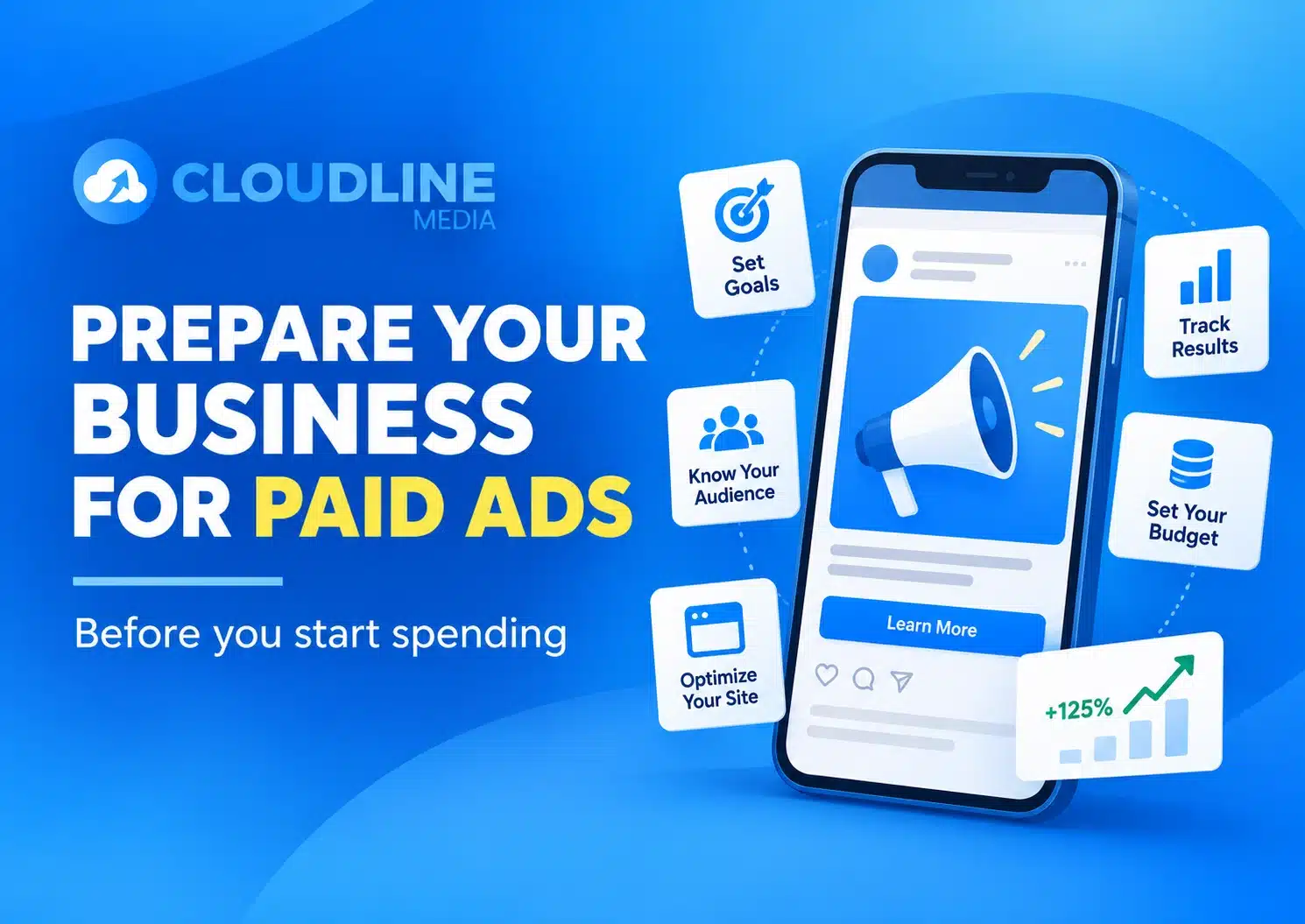
Paid advertising can put your business in front of potential customers quickly, but spending money on ads before your foundations are ready can lead to wasted clicks and poor-quality enquiries. Google Ads, Facebook Ads and Instagram Ads can bring traffic, but that traffic still needs a clear reason to choose your business.
Before launching your first campaign, make sure your website, offer, tracking and follow-up process are ready. A little preparation can help you understand where your advertising budget is going, improve the customer journey and give your campaigns a much better chance of generating useful results.
1. Set a Clear Goal for Your Paid Ads
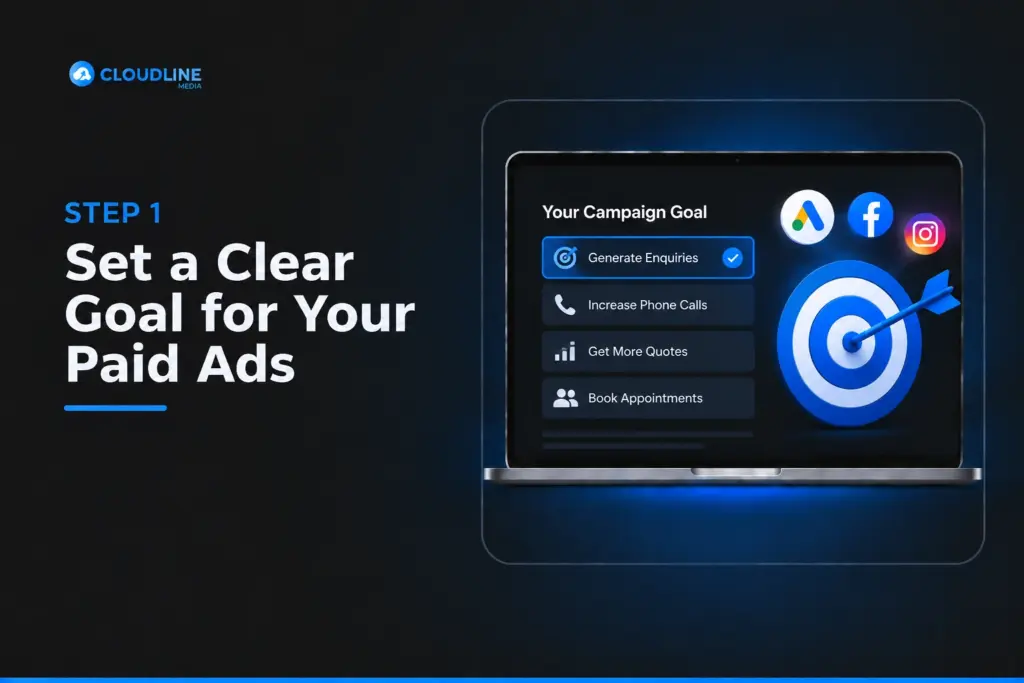
Before choosing an advertising platform, decide exactly what you want your campaign to achieve. Simply saying you want “more business” is too broad because different campaign goals require different adverts, landing pages and tracking.
Choose one main objective for each campaign so you can measure whether it is working. If your goal is generating quote requests, for example, your advert and landing page should guide people directly towards requesting a quote.
Common advertising goals include:
- Generate enquiries
- Increase phone calls
- Request more quotes
- Book appointments
- Sell products online
- Generate website leads
- Promote a specific service
- Increase local awareness
Clear goals make it easier to measure success once your campaign starts.
2. Understand Your Ideal Customer
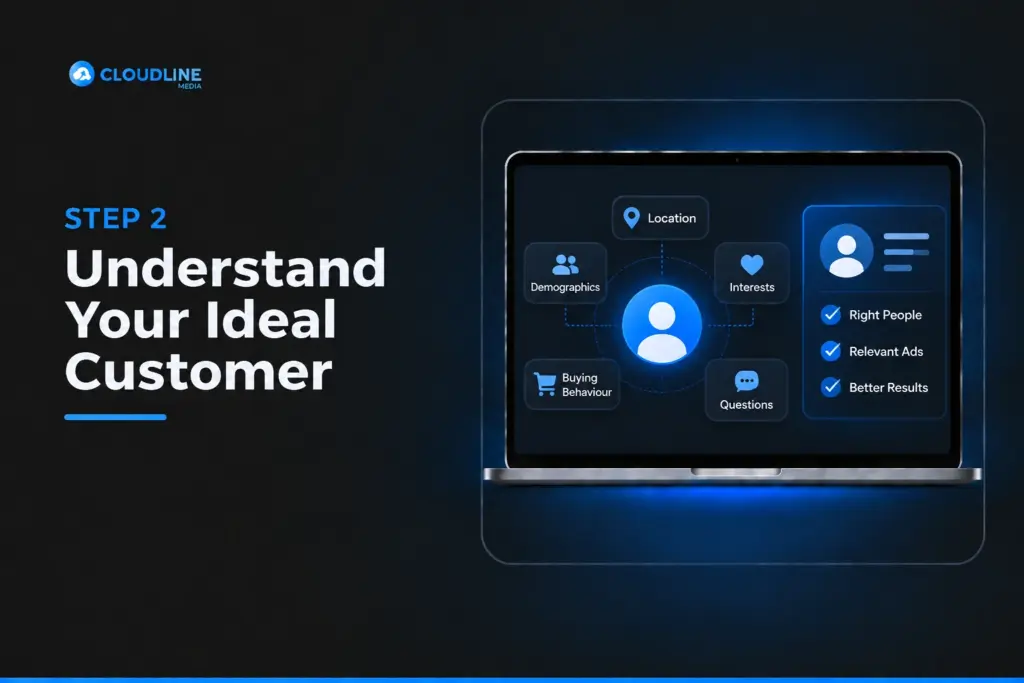
Paid advertising becomes much more effective when you understand exactly who you want to reach. Think about your best customers, the problems they need solving and what matters to them when choosing a business.
Consider their location, needs, buying behaviour and common questions. Understanding these details helps you create adverts that speak directly to the people most likely to become customers rather than trying to advertise to everyone.
Ask yourself:
- Who normally buys from us?
- Where are they located?
- Which services do they need?
- What problems are they trying to solve?
- What matters most when choosing a provider?
- What questions do they ask before buying?
- What would encourage them to contact us?
The clearer your audience becomes, the easier it is to create relevant advertising.
3. Make Sure Your Offer Is Clear
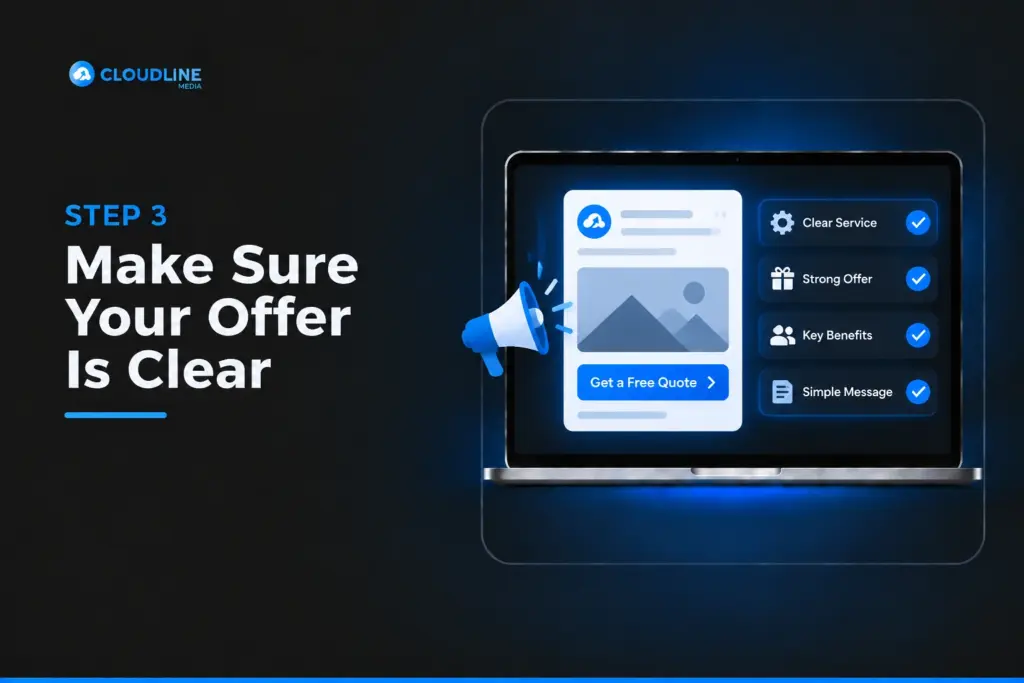
An advert can generate attention, but people still need a strong reason to click and take action. Before spending money, make sure you can clearly explain what you offer and why it matters to your potential customer.
Avoid vague messages such as “high-quality services at competitive prices”. Explain the actual service, problem you solve or next step the customer can take. Your advert should set clear expectations about what someone will find after clicking.
A strong offer might focus on:
- A specific service
- A consultation
- A quote
- A booking
- A free assessment
- A product range
- A limited promotion
- A clear solution to a customer problem
Keep your offer simple enough that someone can understand it within seconds.
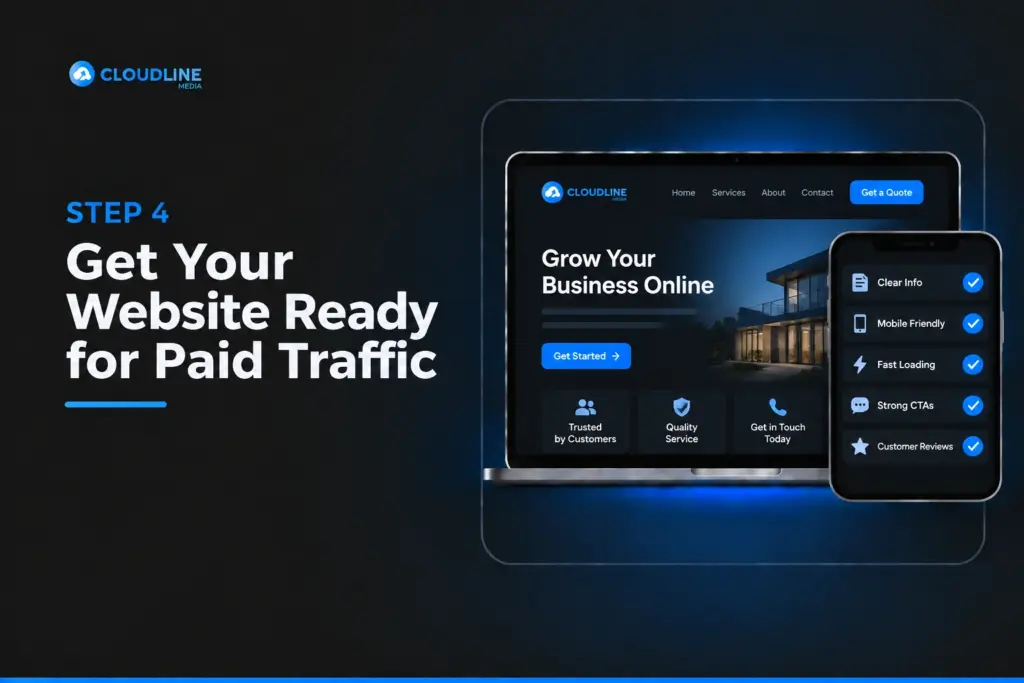
4. Get Your Website Ready for Paid Traffic
Sending paid traffic to a weak website can waste advertising budget. Before running ads, visit your website as if you were a potential customer and check whether it clearly explains what your business provides.
Someone arriving from an advert should quickly understand the service, why it is relevant and what they should do next. Your most important information should be easy to find without forcing visitors to search through several pages.
Check that your website has:
- Clear service information
- Easy navigation
- Accurate contact details
- Strong calls to action
- Genuine customer reviews
- Mobile-friendly pages
- Fast loading times
- Working contact forms
- Clear service areas
Fix obvious problems before paying to send more people to the website.
5. Create a Relevant Landing Page
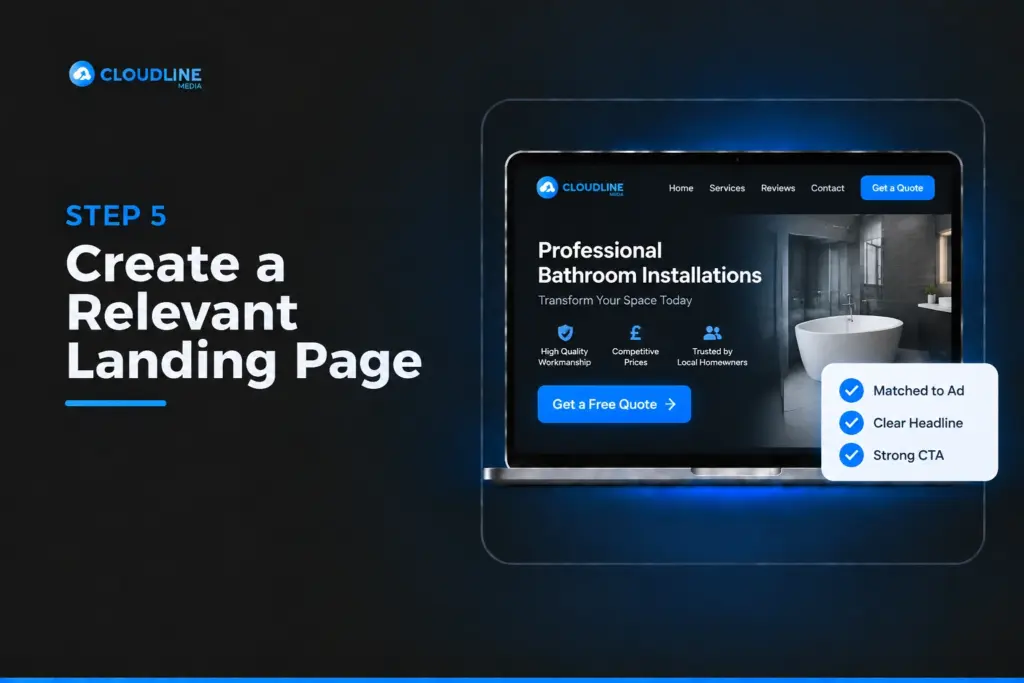
A landing page is the page somebody reaches after clicking your advert. Rather than sending every visitor to your homepage, consider sending them directly to a page that closely matches what the advert promised.
For example, an advert promoting bathroom installations should lead to a bathroom installation page, not a general homepage covering five unrelated services. The closer the page matches the advert, the easier it is for visitors to understand they are in the right place.
A strong landing page should include:
- A clear headline
- The advertised service or offer
- Main customer benefits
- Useful service information
- Genuine reviews
- Clear contact options
- A simple enquiry form
- A strong call to action
Keep the page focused on the action you want the visitor to take.
6. Make Your Calls to Action Clear
Do not make potential customers guess what they should do after reaching your website. Every paid advertising landing page should have a clear next step.
Your call to action should match the goal of the campaign. If the advert promises a quote, the landing page should make requesting that quote simple rather than asking the visitor to search through the website.
Examples include:
- Request a Quote
- Call Today
- Get in Touch
- Book an Appointment
- Get Your Estimate
- Start Your Enquiry
- Book a Consultation
Place important calls to action where visitors can easily see and use them.
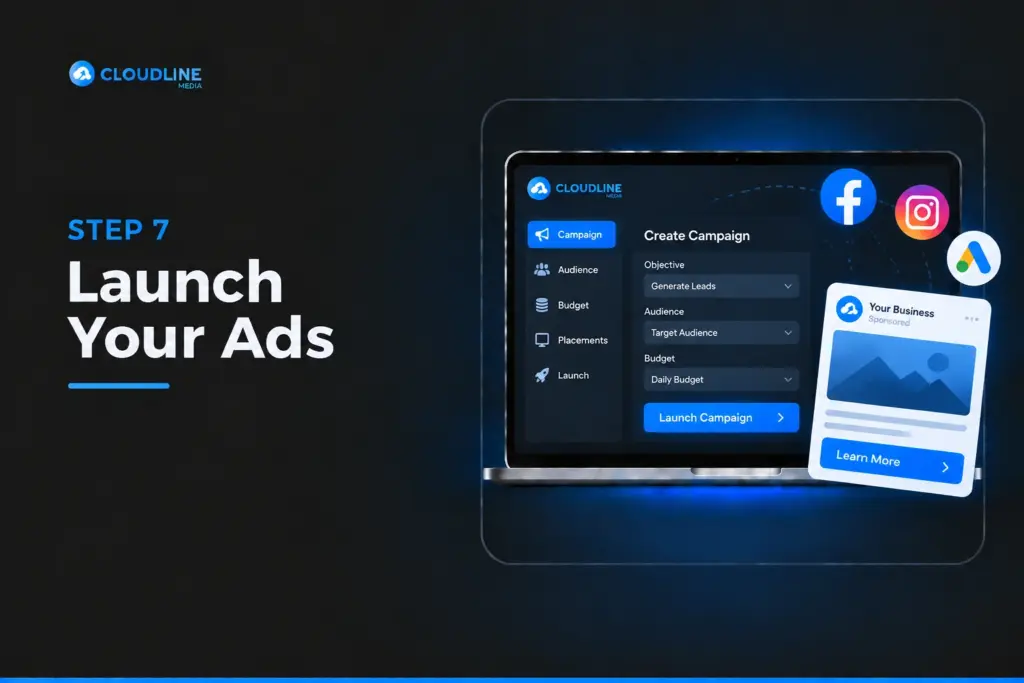
7. Install Tracking Before Launching Your Ads
One of the biggest mistakes businesses can make is starting paid advertising without proper tracking. If you cannot tell which adverts generate phone calls, enquiries or sales, it becomes difficult to know where your budget is producing value.
Set up your tracking before the campaign launches, not several weeks afterwards. Platforms such as Google Ads support conversion tracking so businesses can measure important actions that happen after somebody interacts with an advert.
Depending on your business, track actions such as:
- Phone number clicks
- Completed enquiry forms
- Quote requests
- Appointment bookings
- Purchases
- Email clicks
- Important button clicks
- Other valuable website actions
Tracking helps turn paid advertising from guesswork into something you can measure and improve.
8. Decide How Much You Can Spend
Set a realistic advertising budget before launching your campaign. Your budget should be an amount your business can comfortably test while collecting enough information to understand how the campaign performs.
Do not judge success only by how much each click costs. A more expensive click that generates a valuable customer can be far better than dozens of cheap clicks that produce no enquiries.
Focus on figures such as:
- Total advertising spend
- Number of enquiries
- Cost per enquiry
- Number of sales
- Conversion rate
- Average customer value
- Return on advertising spend
Knowing your numbers helps you decide how much you can reasonably afford to spend to acquire a customer.
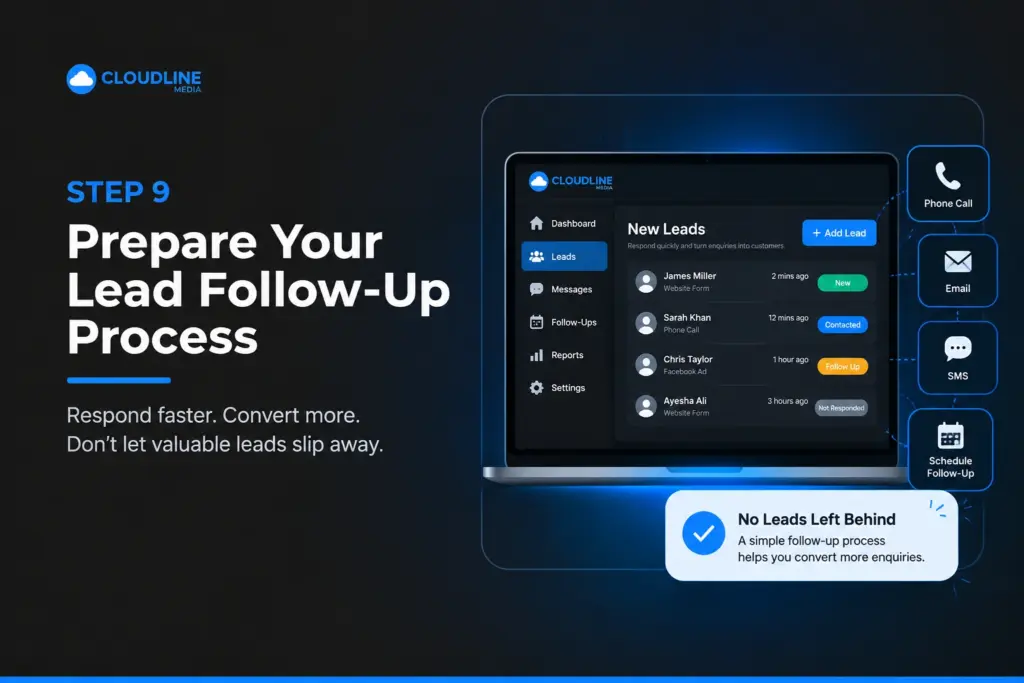
9. Prepare Your Lead Follow-Up Process
Generating an enquiry is only the first part of paid advertising. If leads are ignored for hours or days, potential customers may contact another business before you respond.
Decide who will handle new enquiries and what should happen when somebody calls, submits a form or sends a message. A simple process can prevent valuable leads from being missed.
Before launching your campaign, decide:
- Who responds to enquiries
- How quickly leads should receive a reply
- Which phone number will be used
- Who checks website forms
- How enquiries will be recorded
- When follow-ups should happen
- How missed calls will be handled
Advertising can only generate the opportunity. Your sales and customer service process still needs to convert that opportunity into business.
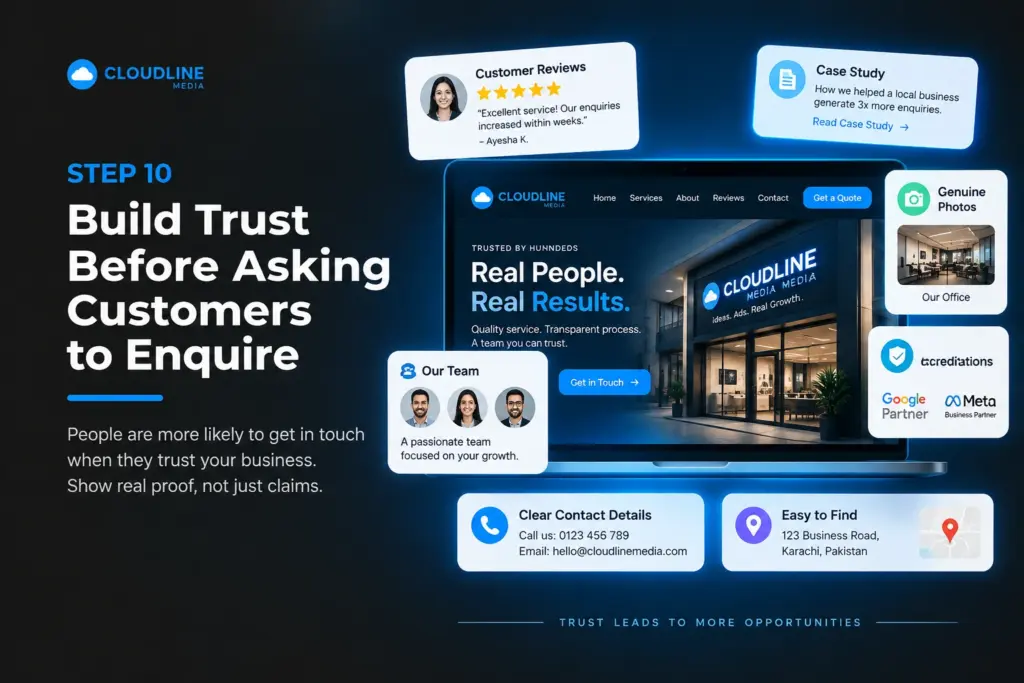
10. Build Trust Before Asking Customers to Enquire
Potential customers may not know your business when they first see your advert. Once they reach your website, they will often look for reasons to decide whether they can trust you.
Give them useful evidence rather than relying on marketing claims alone. Reviews, case studies, clear business information and genuine photographs can help visitors understand who they are dealing with.
Useful trust signals include:
- Customer reviews
- Case studies
- Business information
- Team information
- Genuine photographs
- Relevant accreditations
- Clear phone numbers
- Easy-to-find contact details
- Helpful FAQs
Place trust signals close to important calls to action where they can support the customer’s decision.
11. Make Sure Your Website Works on Mobile
Many people will see adverts and visit websites from their mobile phones. A landing page that looks good on desktop but is difficult to use on mobile can lose potential enquiries.
Test your website on a real phone before launching your campaign. Try submitting the form, clicking the phone number and moving through the page exactly as a customer would.
Check that:
- Text is easy to read
- Buttons are easy to press
- Forms work properly
- Phone numbers are clickable
- Pages load quickly
- Navigation is simple
- Images display correctly
- Calls to action are visible
Small mobile problems can become expensive when you are paying for every visitor.
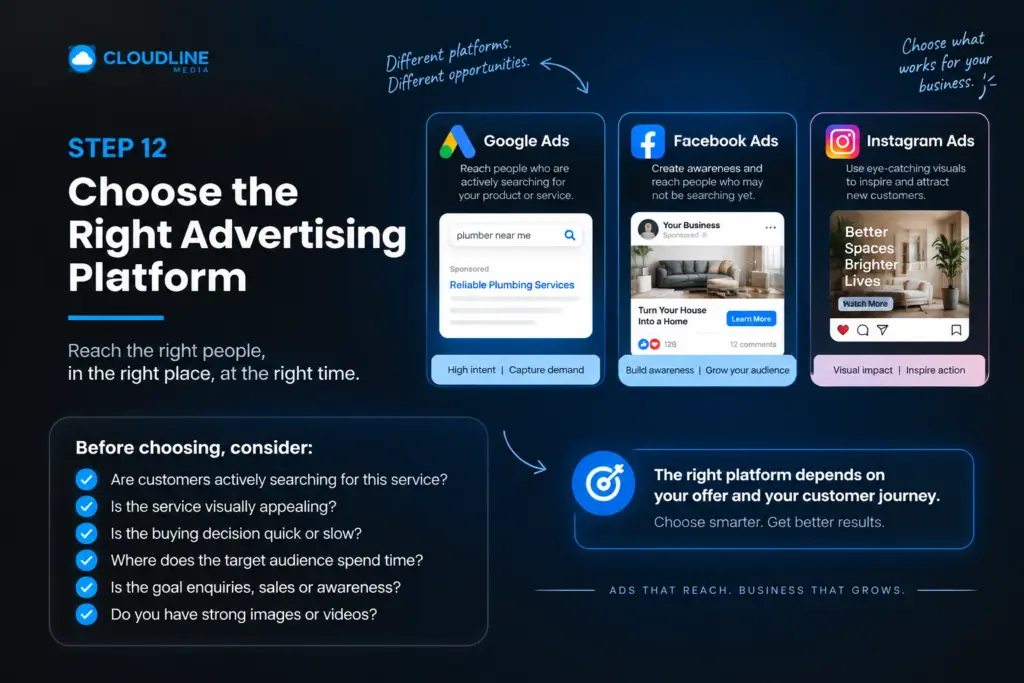
12. Choose the Right Advertising Platform
Do not choose an advertising platform simply because another business is using it. Think about where your customers are and what they are doing when they need your product or service.
Google Ads can be useful when people actively search for a service, while Facebook and Instagram Ads can help businesses create awareness and reach people who may not currently be searching. The right choice depends on your offer and customer journey.
Before choosing, consider:
- Are customers actively searching for this service?
- Is the service visually appealing?
- Is the buying decision quick or slow?
- Where does the target audience spend time?
- Is the goal enquiries, sales or awareness?
- Do you have strong images or videos?
You may eventually use several channels, but starting with a clear reason for choosing each one is more effective than advertising everywhere.
13. Start With One Clear Campaign
Trying to advertise every service at the same time can spread your budget too thinly. Start with one important service, offer or audience so you can understand what works.
A focused campaign also makes tracking easier. You can see which advert attracted the customer, which landing page they visited and whether they completed the action you wanted.
For example, instead of advertising:
- Kitchens
- Bathrooms
- Extensions
- Renovations
- Landscaping
all within one campaign, you might start with one service that has strong customer demand and business value.
Once you have useful data, you can expand carefully.
14. Test Everything Before Going Live
Before spending any money, test the complete customer journey from the advert through to the final enquiry. Small errors such as a broken form or incorrect phone number can waste paid traffic quickly.
Ask someone else to test the journey too. They may notice confusing information or website problems that are easy to miss when you already know how the process is supposed to work.
Before launch, check:
- Advert wording
- Website links
- Landing pages
- Phone numbers
- Contact forms
- Calls to action
- Tracking
- Mobile performance
- Thank-you pages
- Lead notifications
Only launch once you are confident that a potential customer can complete the journey without unnecessary difficulty.
Paid Advertising Readiness Checklist
Before launching Google Ads, Facebook Ads or another paid campaign, review your foundations carefully. The goal is to make sure your business is ready to turn paid traffic into genuine opportunities rather than simply buying website visits.
Use this checklist before switching your campaign on:
- Set a clear advertising goal
- Define your ideal customer
- Choose a clear offer
- Review your website
- Build relevant landing pages
- Add clear calls to action
- Install conversion tracking
- Set a realistic budget
- Prepare your lead follow-up process
- Add genuine trust signals
- Check mobile usability
- Choose the right advertising platform
- Start with a focused campaign
- Test forms and phone numbers
- Check tracking before launch
Completing these steps gives your advertising a much stronger foundation.
Final Thoughts
Paid ads can help businesses reach potential customers quickly, but advertising works best when the foundations are already in place. A good advert cannot fix a confusing website, weak offer, broken enquiry form or slow follow-up process.
Prepare your website, tracking, offer and customer journey before increasing your advertising spend. When every part works together, you can measure what is generating results, reduce unnecessary wasted spend and make better decisions about where to invest your marketing budget.