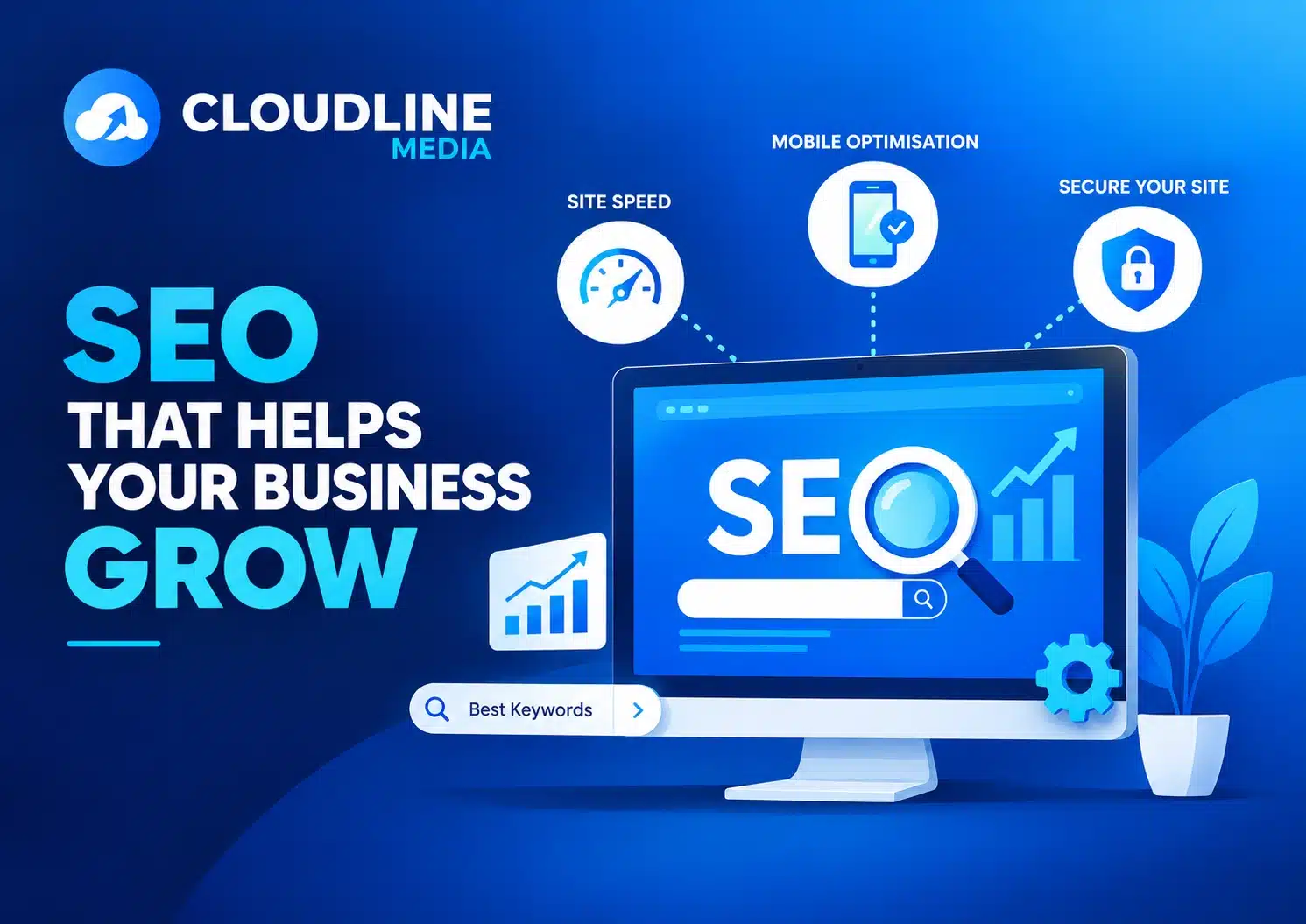
SEO, or search engine optimisation, is the process of improving your website so that people can find your business more easily through search engines such as Google. It involves improving your website content, structure, technical performance and online authority so search engines can better understand what your business offers.
For businesses, SEO can help increase online visibility, attract relevant website visitors and generate more enquiries over time. Instead of relying only on paid advertising, SEO gives your business an opportunity to appear when potential customers are already searching for the products or services you provide.
What Is SEO?
SEO stands for search engine optimisation. Its purpose is to help search engines understand your website while making it easier for potential customers to discover useful pages when they search online. Google describes SEO as helping search engines understand your content and helping users find your website through search results.
SEO is not one single task. It combines website content, keywords, page structure, internal links, technical improvements and other activities that help build a stronger search presence. Good SEO also focuses on providing visitors with useful information rather than simply trying to influence rankings.
How Does SEO Work?
Search engines discover and organise web pages so they can provide useful results when somebody performs a search. Google uses automated crawlers to discover pages, processes those pages for its index and then selects relevant results when users search for information.
SEO helps make this process easier by creating clear, useful and accessible website pages. Your website should explain what each page is about, use logical links and provide information that matches what potential customers are searching for.
Some important areas of SEO include:
- Keyword research
- Website content
- On-page SEO
- Technical SEO
- Local SEO
- Internal linking
- Website performance
- Link building
- Search performance tracking
These areas work together to help build your website’s presence in organic search results.
Why Is SEO Important for Your Business?
Your potential customers are already using search engines to look for information, products and services. If your business appears when someone searches for something you provide, you have an opportunity to attract a visitor who already has an interest in your offer.
Without SEO, your website may be difficult to discover even if your services are excellent. Competitors with stronger search visibility may appear first, giving potential customers more opportunities to visit their websites instead of yours.
SEO can help your business:
- Increase search visibility
- Reach potential customers
- Generate website traffic
- Build online credibility
- Support local visibility
- Generate enquiries
- Create long-term marketing value
The main goal is not simply to rank for as many keywords as possible. It is to become visible for searches that matter to your business and your customers.
1. SEO Helps Potential Customers Find Your Business
Imagine someone needs a plumber, builder, marketing agency, kitchen installer or another service. Instead of searching through a printed directory, they are likely to use Google and look through the businesses appearing for their search.
SEO helps your website compete for that visibility. By creating useful pages around your services and the questions customers ask, you increase the number of relevant searches where your business may have an opportunity to appear.
For example, customers might search for:
- Plumber near me
- Local builder
- Kitchen fitter in Essex
- Waste clearance company
- Digital marketing agency
- Bathroom renovation company
- Website designer for small businesses
Appearing for relevant searches puts your business in front of people who may already be considering making a purchase or requesting a service.
2. SEO Can Attract More Relevant Website Traffic
Getting thousands of website visitors means very little if none of them are interested in your services. Effective SEO focuses on attracting relevant traffic rather than simply increasing visitor numbers.
For example, a roofing company does not need people searching for unrelated home products. It needs homeowners or businesses searching for roofing services, roof repairs and related information within the areas the company serves.
Keyword research helps identify:
- What customers search for
- Which services attract demand
- How customers describe their problems
- Which questions they ask
- Which locations they include
- How close they may be to making a decision
Understanding these searches can help you create pages that match real customer needs instead of guessing what people want.
3. SEO Helps Build Trust and Credibility
Appearing prominently in search results can increase awareness of your business. When customers repeatedly see your business while researching a service, your name can become more familiar.
Your website then needs to support that visibility with useful information. Clear service pages, genuine reviews, helpful content and straightforward contact information can help visitors feel more confident about taking the next step.
A trustworthy website may include:
- Detailed service information
- Customer reviews
- Clear contact details
- Helpful FAQs
- Business information
- Case studies
- Relevant photos
- Easy navigation
SEO attracts the visitor, but the quality of your website helps determine what they do after arriving.
4. SEO Supports Long-Term Business Growth
Paid advertising can increase visibility quickly, but the traffic usually depends on continuing to fund the campaign. SEO works differently because useful website pages can continue attracting visitors after they have been created.
That does not mean SEO is free or requires no ongoing work. Websites need monitoring, content updates and improvements, but the pages you build can become valuable digital assets that support your business for a longer period.
For example, a useful service page could continue:
- Appearing in relevant searches
- Attracting potential customers
- Supporting other website pages
- Answering customer questions
- Generating enquiries
The aim is to gradually build a stronger website rather than depending entirely on short-term campaigns.
5. SEO Helps You Compete With Other Businesses
Your competitors are competing for the same customers. When someone searches for a service, several businesses may be trying to appear for that exact search.
SEO helps give your business a clearer strategy for competing online. Instead of relying on customers already knowing your company name, you can create visibility around the problems, services and locations relevant to your audience.
A smaller business can focus on specific opportunities such as:
- Core services
- Local searches
- Specialist services
- Customer questions
- Specific locations
- Helpful industry topics
You do not necessarily need to compete for every possible search. Focusing on relevant opportunities can help your business build a stronger position where it matters.
6. Local SEO Helps Customers Find Businesses Near Them
Local SEO is particularly important for companies that serve customers within specific towns, cities or regions. It focuses on helping businesses become more visible when people search for services within a particular area.
For example, someone searching for “electrician in Chelmsford” has much clearer local intent than someone simply searching for “electrician”. A local electrical company would therefore want its website and Google Business Profile to clearly communicate the areas it serves.
Local SEO can involve:
- Google Business Profile optimisation
- Accurate business information
- Customer reviews
- Local service pages
- Location-focused website content
- Consistent contact details
- Relevant local links
These elements can help customers understand where you operate and whether your business is relevant to their needs.
7. SEO Improves Your Website Content
SEO encourages businesses to think carefully about what potential customers actually want to know. Instead of creating website pages with very little information, you can answer the questions people ask during their buying journey.
Your content might explain how a service works, what is included, who it is suitable for, where it is available and what customers should expect. Google recommends creating content that is useful, original, well organised and written primarily for people. (Google for Developers)
Useful SEO content can include:
- Service pages
- Location pages
- Blog posts
- Buying guides
- Case studies
- FAQs
- Help guides
- Comparison pages
Every piece of content should have a purpose and provide information that genuinely helps the reader.
8. SEO Can Improve the Customer Experience
SEO is not only about adding keywords to website pages. Many useful SEO improvements can also make your website easier for real customers to use.
Clear navigation, descriptive headings, internal links and well-organised content help visitors find information more easily. Search engines also benefit when a website has a logical structure and important pages can be discovered through links.
A stronger website experience can include:
- Simple navigation
- Clear page layouts
- Fast-loading pages
- Mobile-friendly design
- Readable text
- Useful internal links
- Clear calls to action
- Relevant content
When visitors can quickly find what they need, they are more likely to continue exploring your website rather than leaving.
9. What Are Keywords in SEO?
Keywords are the words and phrases people enter into search engines. They help businesses understand how potential customers describe their needs and what information they are trying to find.
For example, a kitchen company might discover that customers search for phrases such as “kitchen installation”, “new kitchen cost” or “kitchen fitter near me”. Each phrase represents a slightly different need and may require a different type of website page.
Keywords can be grouped around:
- Services
- Products
- Customer problems
- Questions
- Locations
- Buying intent
- Informational searches
The goal is not to repeat keywords as often as possible. Google specifically warns against keyword stuffing, so keywords should appear naturally within useful content.

10. What Is On-Page SEO?
On-page SEO refers to improvements made directly to individual website pages. It helps search engines understand what a page covers while also making the content easier for visitors to use.
Each important page should focus on a clear topic and provide enough information to satisfy the visitor’s reason for reaching it. Page titles, headings, content and internal links should all support that main purpose.
Common on-page SEO elements include:
- Page titles
- Meta descriptions
- H1 headings
- H2 and H3 headings
- Page content
- Internal links
- Image descriptions
- URLs
- Calls to action
Good on-page SEO should feel natural to the person reading the page. Search optimisation should support the content rather than making it difficult to read.
11. What Is Technical SEO?
Technical SEO focuses on making sure search engines can access, understand and process your website correctly. A website could contain excellent content but still struggle if important technical problems prevent search engines from accessing it properly.
Technical SEO can become complex, but businesses do not need to understand every technical detail themselves. The important thing is making sure the website is accessible, secure, performs well and works properly across different devices.
Technical SEO can include:
- Website crawling
- Indexing
- Site speed
- Mobile usability
- HTTPS security
- XML sitemaps
- Redirects
- Broken links
- Website architecture
- Structured data
Regular technical checks can help identify problems before they affect large parts of the website.
12. What Is Off-Page SEO?
Off-page SEO refers to signals and activities that happen outside your website. One important area is earning relevant links from other websites because links can help search engines discover pages and understand how websites are connected.
Links should be earned naturally through useful content, genuine relationships, industry activity, PR and other legitimate methods. Buying large numbers of poor-quality links or participating in schemes designed mainly to manipulate rankings can create unnecessary risk.
Useful opportunities might include:
- Industry publications
- Local organisations
- Business partners
- Useful resources
- Digital PR
- Relevant directories
- Community websites
Quality and relevance matter more than simply trying to collect as many links as possible.
13. SEO and Paid Advertising Are Different
SEO focuses mainly on earning visibility in organic search results, while paid search advertising allows businesses to pay for adverts that can appear for selected searches. Both can be useful, but they work in different ways.
Paid advertising can provide faster visibility, while SEO generally requires more time to develop. Google also makes clear that paying for advertising does not buy higher organic rankings, as its organic search results are separate from paid advertising.
SEO can support paid campaigns by creating:
- Better service pages
- Stronger landing pages
- Clearer website content
- Improved customer journeys
- Useful information
- Better internal structure
Using both channels strategically can create a more balanced approach to search marketing.
14. How Long Does SEO Take to Work?
SEO is rarely an instant process. Some website changes may be noticed relatively quickly, while competitive searches and wider improvements can require considerably more time.
Google itself explains that some search changes can take a few hours while others may take several months, and recommends allowing time before deciding whether an improvement has worked.
The speed of results can depend on factors such as:
- Your current website
- Your competition
- Your industry
- Your location
- Website quality
- Existing visibility
- Content quality
- Technical problems
- SEO activity
Be cautious about anyone promising guaranteed first-place rankings within a fixed period. SEO involves many factors, and no business can control search results completely.
15. How Can You Measure SEO Results?
SEO should be measured using business-relevant information rather than rankings alone. Ranking for a keyword is useful only if that visibility leads to relevant traffic, enquiries or another valuable customer action.
Google Search Console can help website owners understand how their site performs within Google Search, while website analytics and conversion tracking can provide additional information about what visitors do after reaching the site.
Useful SEO measurements can include:
- Organic website traffic
- Search impressions
- Search clicks
- Keyword visibility
- Enquiry form submissions
- Phone calls
- Conversion rates
- Important page visits
- Revenue from organic traffic
Tracking meaningful results gives you a clearer picture of whether SEO is actually supporting the business.
16. Common SEO Mistakes to Avoid
SEO becomes less effective when businesses focus on shortcuts instead of customers. Trying to manipulate search engines can create poor website experiences and may breach search engine policies.
Common mistakes include creating low-value pages, copying content from other websites, repeating keywords excessively and buying links primarily to influence rankings. Google’s spam policies specifically warn against practices such as keyword stuffing, link spam and creating large amounts of low-value content primarily to manipulate search results.
Avoid:
- Keyword stuffing
- Copying competitor content
- Creating unnecessary location pages
- Buying poor-quality links
- Ignoring mobile visitors
- Publishing content with no clear purpose
- Forgetting internal links
- Ignoring technical problems
- Expecting immediate results
- Focusing only on rankings
Good SEO should make your website more useful, not less useful.
17. How Should a Business Start With SEO?
Start by understanding what your customers search for and checking whether your existing website provides useful pages for those searches. Identify your most important services first rather than trying to optimise everything at the same time.
Once the foundations are clear, create a simple SEO plan that improves the website step by step. Measure what happens, learn from the data and continue improving the pages that matter most. The aim is to build steady progress rather than search for a quick ranking trick.
A simple starting plan could be:
- Review your current website.
- Research customer searches.
- Identify your most important services.
- Improve your service pages.
- Create useful supporting content.
- Improve your Google Business Profile.
- Fix technical website problems.
- Build useful internal links.
- Track calls and enquiries.
- Review performance regularly.
Final Thoughts
SEO helps connect your business with people who are already searching for the products, services or information you provide. By improving your website content, structure, local presence and technical foundations, you can create more opportunities for potential customers to discover your business through search engines.
Successful SEO is not about repeating keywords or chasing every algorithm change. It is about understanding what your customers need, creating genuinely useful pages and continually improving your online presence. When approached consistently, SEO can become an important part of generating relevant traffic, building trust and supporting long-term business growth.