
Digital marketing can feel complicated when there are so many platforms, tools and strategies to choose from. SEO, social media, Google Ads, email marketing and content can all be useful, but trying to do everything at once usually creates confusion.
A simple digital marketing plan gives your business direction. It helps you understand who you want to reach, where to find them, what to say and how to measure whether your marketing is working.
The good news is that you do not need a huge budget or a complicated strategy. You simply need a clear plan that focuses on the right customers, the right channels and the right actions.
What Is a Digital Marketing Plan?
A digital marketing plan is a simple guide that explains how your business will use online channels to reach potential customers and achieve specific goals. It gives your marketing a clear purpose instead of relying on random posts, adverts or website updates.
Your plan should explain what you want to achieve, who you want to reach and which digital channels will help you get there. It should also include a way to track your results so you can improve over time.
A good digital marketing plan does not need to be twenty pages long. For many small businesses, a clear one-page strategy can be more useful than a complicated document that nobody follows.
Why Does Your Business Need a Digital Marketing Plan?
Without a plan, it is easy to spend time and money on marketing without knowing whether it is helping your business. You may post on social media, pay for adverts or create website content without a clear goal.
A digital marketing plan keeps your activity focused. Every website page, social media post, advert and piece of content should support a clear business objective. The goal is not to be active everywhere. The goal is to be active where it matters.
A strong plan can help you:
- Reach the right audience
- Improve your online visibility
- Generate more enquiries
- Build customer trust
- Use your marketing budget more effectively
- Understand which channels are working
- Make better decisions using real data
Step 1: Set Clear Marketing Goals
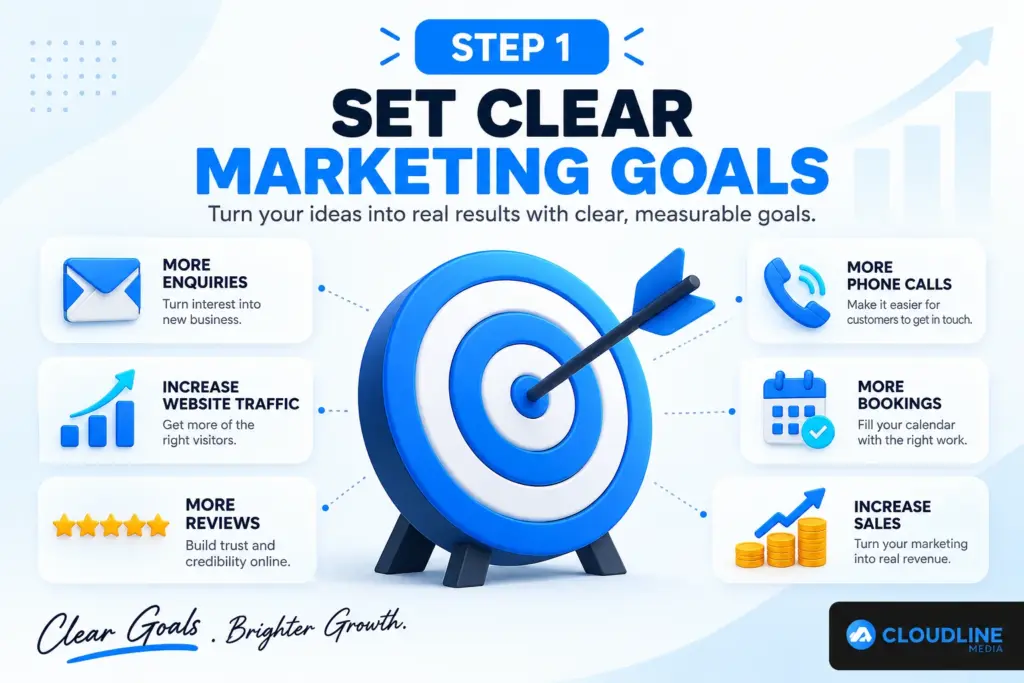
The first step is deciding what you actually want your digital marketing to achieve. Without a clear goal, it becomes difficult to know which strategy or platform you should focus on.
Avoid vague goals such as “get more customers” or “grow online”. These ideas are useful, but they are too broad to measure properly.
Instead, choose specific goals such as:
- Generate 20 website enquiries each month
- Increase website traffic by 30%
- Receive 10 new Google reviews each month
- Increase calls from Google Business Profile
- Grow email subscribers
- Generate more online bookings
- Increase sales from a specific service
- Improve visibility in selected locations
Your goals should connect directly to your wider business objectives. If your main priority is generating more local enquiries, your digital marketing plan should focus on activities that support that result.
Keep Your Goals Realistic
You do not need ten different marketing goals at once. Start with one or two priorities that are important to your business right now. For example, a local service business may focus on increasing Google visibility and generating more quote requests.
An ecommerce business may focus more on product sales, repeat customers and email marketing. Clear goals make the rest of your marketing plan easier to build.
Step 2: Understand Your Ideal Customer
Successful digital marketing starts with understanding the people you want to reach. Your marketing becomes much easier when you know who your ideal customers are and what they are looking for.
Think about your best existing customers. Consider why they chose your business, what service they needed and what problems they wanted to solve. You do not need to know every detail about your audience. Focus on information that helps you communicate more clearly.
Ask questions such as:
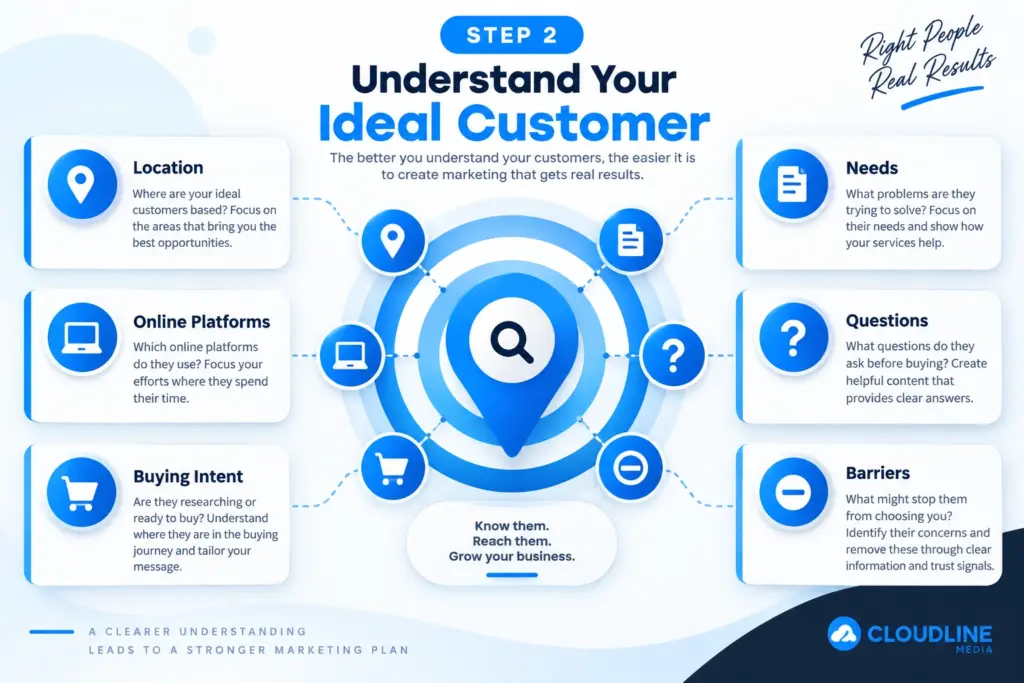
- Who normally buys from you?
- Where are they located?
- What services are they most interested in?
- What problems are they trying to solve?
- What questions do they ask before buying?
- What matters most when choosing a business?
- Which online platforms do they use?
- What might stop them from contacting you?
Think About Customer Intent
Customer intent means understanding what someone is trying to achieve when they search online. Different customers may be at different stages of their buying journey.
Someone searching “how much does a new bathroom cost?” is probably researching. Someone searching “bathroom fitter near me” may be much closer to requesting a quote.
Your marketing should support both types of customer. Helpful content can answer early questions, while strong service pages can help customers who are ready to take action.
Step 3: Review Your Current Online Presence
Before creating new marketing campaigns, look at what you already have. Understanding your current position helps you identify the areas that need the most attention. Start by reviewing your main digital channels.
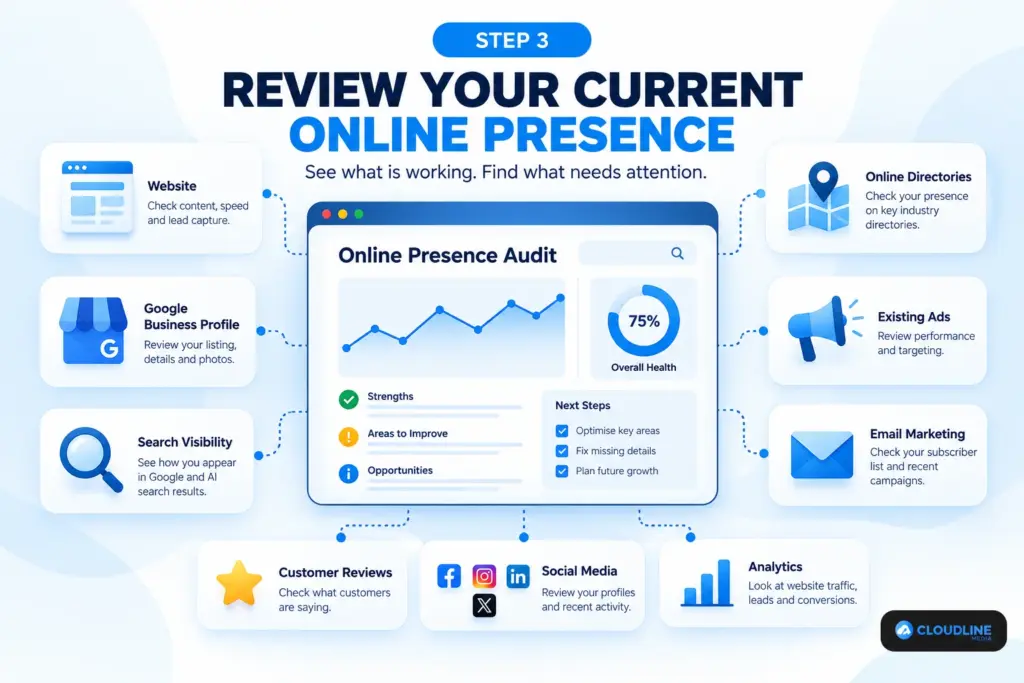
Check your:
- Website
- Google Business Profile
- Social media profiles
- Customer reviews
- Search engine visibility
- Online directories
- Existing adverts
- Email marketing
- Website analytics
Look at your online presence from a customer’s point of view. Ask whether someone can quickly understand what your business offers and how to contact you.
Review Your Website First
Your website is often at the centre of your digital marketing activity. Search engines, social media and advertising campaigns may all send potential customers back to it. Make sure your website clearly explains your services and gives visitors an easy way to contact you.
It should also guide people towards the next step, whether that means requesting a quote, calling your business or making a booking. Check that important information is easy to find. Fixing weak foundations can often be more valuable than immediately spending more money on advertising.
This includes:
- Services
- Service areas
- Contact details
- Customer reviews
- Calls to action
- Frequently asked questions
- Useful proof and information
Step 4: Choose the Right Digital Marketing Channels
You do not need to use every digital marketing channel available. Focus on the platforms that are most likely to reach your ideal customers. Different channels have different strengths.
Website
Your website gives potential customers a place to learn about your business and services. It should clearly explain what you offer and make it easy for people to contact you. A strong website supports almost every other area of your digital marketing.
Search Engine Optimisation
SEO helps improve your visibility when people search for your services online. This can include improving service pages, creating location pages and publishing useful content. SEO is especially valuable for businesses that want to attract customers searching for specific services.
Google Business Profile
For local businesses, Google Business Profile can be one of the most important digital marketing channels. It helps customers find your business in local search results and Google Maps. Keep your business details accurate and regularly update your profile with relevant information.
Social Media
Social media can help your business stay visible and build familiarity with potential customers. Focus on the platforms your customers are most likely to use. You do not need to post on every platform every day. Consistency on one or two relevant platforms is usually more valuable.
Email Marketing
Email marketing allows you to communicate directly with people who have already shown interest in your business. It can be useful for sharing offers, updates, helpful information and reminders.
The audience is already familiar with your business, which makes email a useful channel for maintaining relationships.
Paid Advertising
Google Ads and social media advertising can help you reach potential customers more quickly. Paid campaigns can work well when your website, offer and tracking are already in place. Avoid spending heavily until you understand where you are sending visitors and what action you want them to take.

Step 5: Plan Your Website Content
Your website should answer the questions potential customers have before they contact you. Good content helps people understand your services and can also improve your search visibility. Start with your most important services.
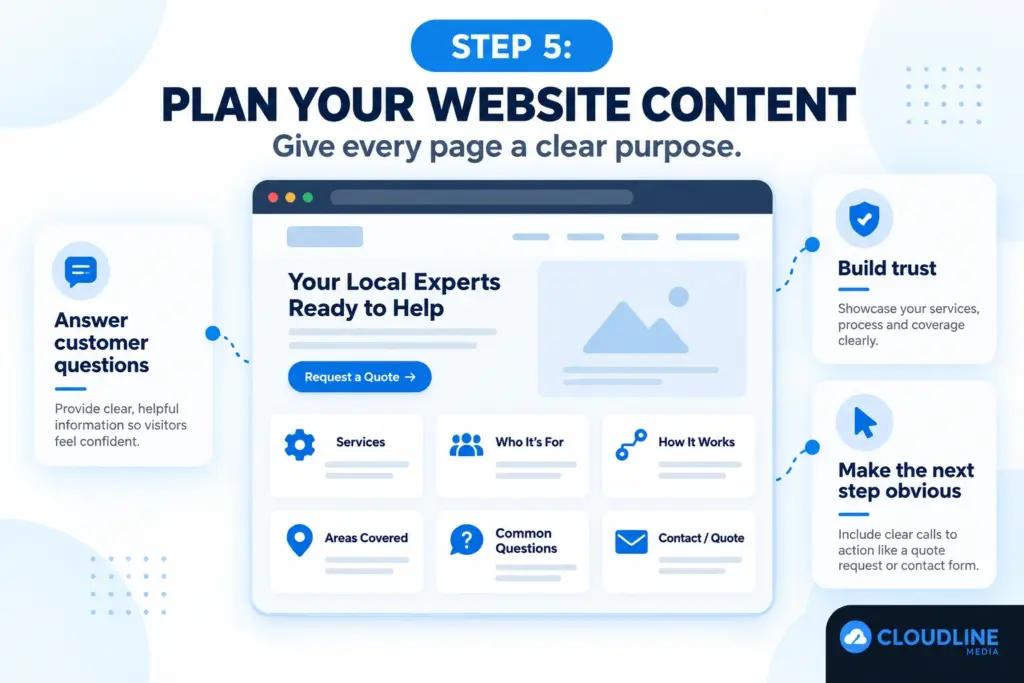
Create useful pages that explain:
- What the service includes
- Who the service is for
- How the process works
- Areas you cover
- Common customer questions
- Reasons customers may choose your business
- How to request more information
Avoid creating pages just to add more words to your website. Every page should have a clear purpose.
Create Content Around Customer Questions
Your customers can provide some of your best content ideas. Think about the questions you regularly receive through phone calls, emails and enquiries. Turn those questions into useful content. Answering these questions can build trust before someone contacts you.
For example:
- How much does the service cost?
- How long does the service take?
- What should customers expect?
- What is included?
- How should customers prepare?
- Which option is best?
- What areas do you cover?
Step 6: Create a Simple Content Schedule
Consistency is easier when you know what you are going to publish in advance. A simple content schedule helps you avoid constantly wondering what to post. Your schedule does not need to be complicated.
You could plan:
- One useful blog each month
- Two customer-focused social posts each week
- One customer review post
- One helpful tip
- One business update
- One short video
- Regular Google Business Profile updates
Choose a schedule that your business can realistically maintain. Publishing useful content consistently is better than posting every day for two weeks and then disappearing.

Keep Content Useful
Do not create content simply because you feel your business should be posting. Every piece of content should give the customer a reason to pay attention.
Good content may educate, answer a question, explain a service or solve a small problem. The focus should remain on what your customer needs to know.
Step 7: Build Your Local Online Presence
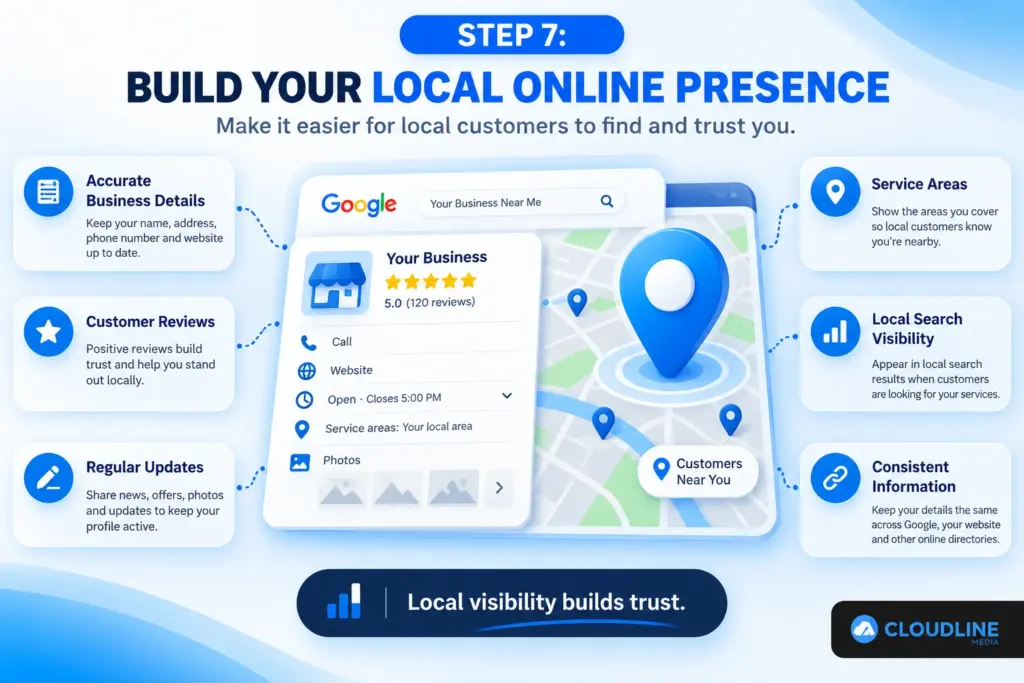
Local visibility is important for businesses that serve specific towns, cities or regions. Customers often search for services based on their location. Your Google Business Profile should be a priority. The information should match the details shown on your website wherever possible.
Make sure it includes accurate:
- Business name
- Phone number
- Website
- Opening hours
- Service information
- Business category
- Photos
- Service areas
Ask Customers for Reviews
Customer reviews help build trust and can strengthen your online reputation. People often read reviews before deciding whether to contact a business. Ask satisfied customers for genuine feedback and make the process easy for them.
You should never pressure customers into leaving reviews, but a simple request can make a big difference. Respond professionally to feedback whenever possible.
Step 8: Decide Your Marketing Budget
A digital marketing plan should include a realistic budget. Knowing how much you can spend helps you decide where to focus your resources. Focus first on the activities that support your most important goals.
Your budget may include:
- Website improvements
- SEO
- Content creation
- Social media
- Paid advertising
- Email marketing software
- Tracking tools
- Design
- Photography or video
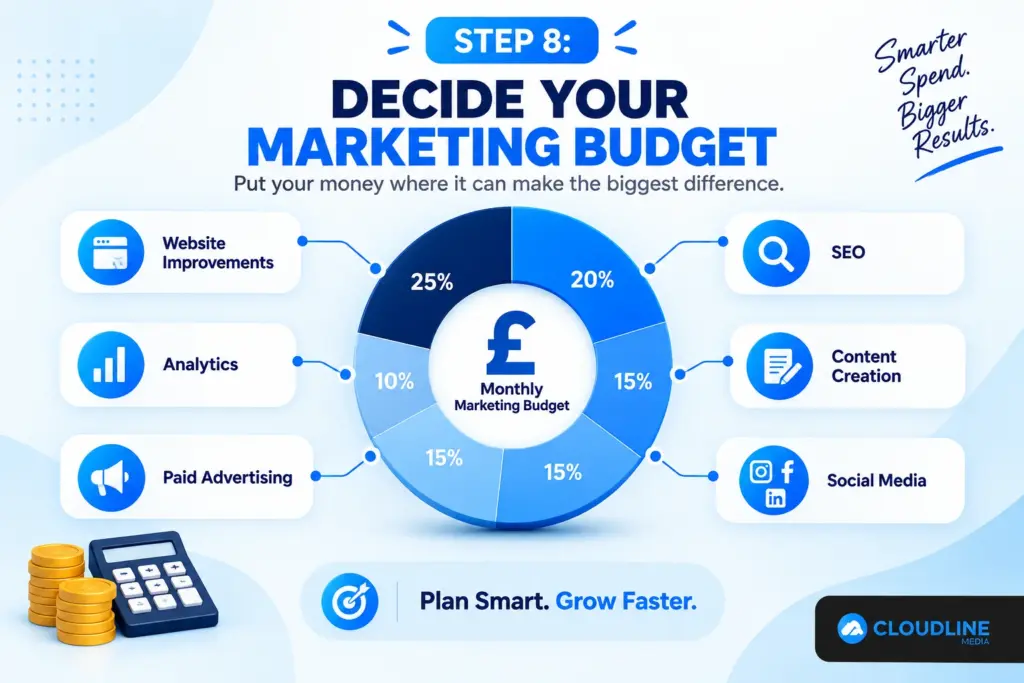
Avoid Spreading Your Budget Too Thinly
Trying to spend a small amount across many channels can reduce the impact of your marketing. It is often better to focus on a few priorities and improve them properly.
For example, strengthening your website, Google presence and SEO may be more useful than running adverts across several different platforms at once. Your budget should follow your strategy, not the latest marketing trend.
Step 9: Track the Results That Matter
Digital marketing becomes much more valuable when you know what is actually working. Tracking helps you understand where customers are coming from and which activities generate enquiries. Do not focus only on likes, views or website traffic.
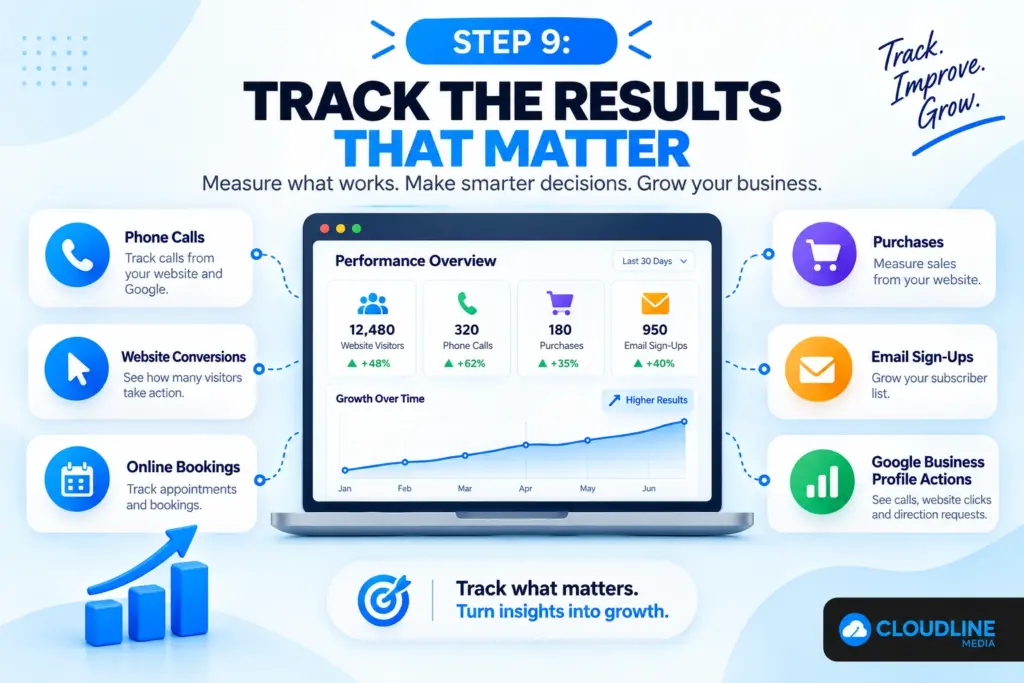
Track meaningful actions such as:
- Phone calls
- Contact form submissions
- Quote requests
- Online bookings
- Purchases
- Email sign-ups
- Website conversions
- Google Business Profile actions
These numbers give you a clearer picture of business performance.
Review Your Results Regularly
Set aside time each month to review your marketing. Look at what improved, what generated enquiries and what needs more attention. Use this information to improve the next month of activity.
Ask yourself:
- Which channels generated the most enquiries?
- Which website pages performed well?
- Which content received useful engagement?
- Which campaigns cost too much?
- Where are visitors leaving?
- Which services are attracting attention?
Step 10: Improve Your Plan Over Time
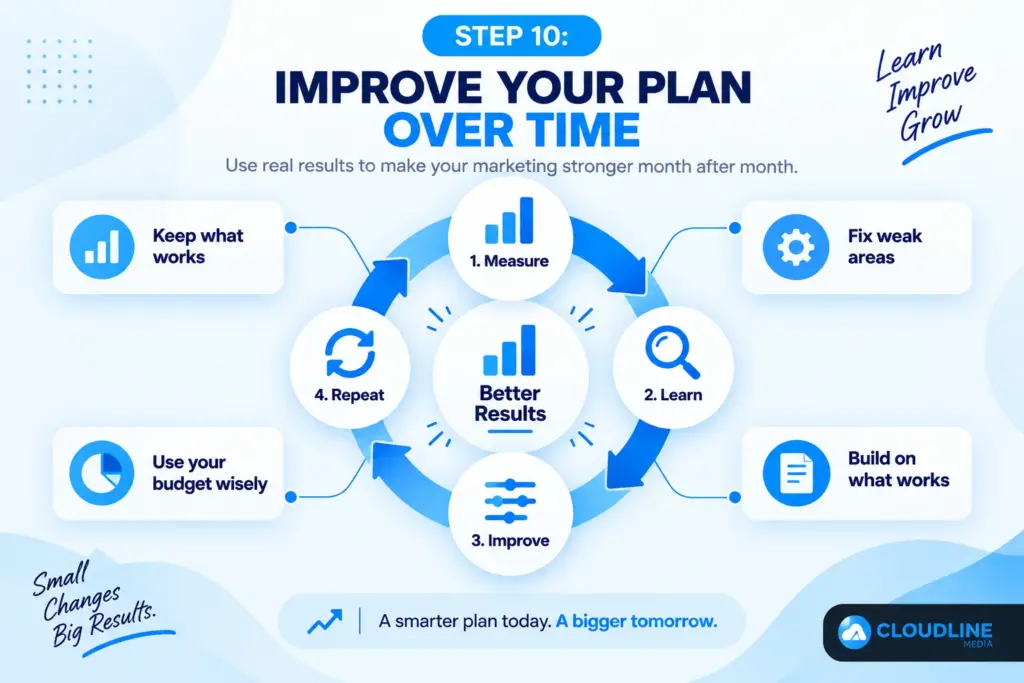
Your first digital marketing plan will not be perfect. It does not need to be. The purpose of tracking results is to learn what works and improve your strategy over time. If a particular service page generates strong enquiries, you may decide to improve it further.
If one social platform produces little value, you may spend less time there and focus on another channel. Digital marketing works best when your strategy continues to develop based on real results.
Keep Your Plan Simple
A good plan should make marketing easier to manage, not harder. If you can answer those questions clearly, you already have the foundations of a useful digital marketing strategy. Your basic digital marketing plan can be summarised in seven questions:
- What do you want to achieve?
- Who are your ideal customers?
- What are they searching for?
- Which channels will you use?
- What content will you create?
- How much will you spend?
- How will you measure results?
Common Digital Marketing Mistakes to Avoid
Even a simple strategy can become ineffective if there is no clear direction. The most successful approach is usually consistent rather than complicated. Focus on doing the important things well.
Try to avoid these common mistakes:
- Trying to use every marketing platform
- Posting without a clear purpose
- Running adverts without tracking
- Sending visitors to weak website pages
- Ignoring customer reviews
- Targeting everybody instead of a clear audience
- Expecting immediate SEO results
- Focusing only on website traffic
- Changing strategy too frequently
- Failing to measure enquiries and conversions
Final Thoughts
Creating a digital marketing plan does not have to be difficult. Start by defining your goals, understanding your customers and reviewing what your business already has online.
Then choose the channels that make the most sense for your audience. Build useful website content, improve your Google presence, stay consistent with your marketing and track the actions that matter.
Most importantly, avoid trying to do everything at once. Build your digital marketing step by step, measure the results and improve your strategy as you learn what works.